

A Guide to Choosing and Styling Car Wall Art
Forget flimsy posters tacked to a bedroom wall. We're talking about car wall art – statement pieces that capture the raw energy of motorsport and the breathtaking beauty of automotive design. These are premium prints, the kind that can transform a home office, living room, or garage into a sophisticated tribute to your passion.
Transform Your Space with Motorsport Passion

This is where high-speed obsession meets sharp interior design. Choosing the right car wall art isn’t just about filling a blank space; it’s a way to stamp your personality on your home and elevate its whole vibe. It’s a deliberate choice that says something about who you are and what gets your engine running.
This move toward personalised décor is really taking off. Across Australia, the wall art market is booming, fuelled by a post-pandemic wave of home improvement projects. Aussies are keen to customise their spaces, and they’re investing in art that’s both accessible and looks incredible.
A Guide for Every Enthusiast
Think of this as your co-pilot for navigating the world of motorsport art. Whether you’re a die-hard Formula 1 fanatic or a lover of classic automotive curves, we’ll give you the confidence to pick the perfect piece. Our goal is simple: to help you turn any room into a stylish conversation starter that celebrates the world of racing.
A well-chosen piece of car wall art does more than just decorate a room—it tells a story. It captures a moment in racing history, celebrates an engineering marvel, or immortalises a legendary circuit, connecting your personal space to the larger world of motorsport.
What You Will Discover
In this guide, we'll walk you through everything you need to know to choose, style, and care for your new artwork. We're cutting through the noise with practical steps and clear advice, taking all the guesswork out of decorating.
We’ll get into key topics like:
- Identifying Your Style: From minimalist circuit maps to dynamic driver portraits.
- Materials and Framing: Deciding between a classic canvas or a sleek framed print.
- Sizing and Placement: Mastering the art of arrangement for maximum visual impact.
- Curating a Collection: Tips for building a cohesive display that grows with your passion.
By the time you're done, you’ll know exactly how to select pieces that not only look fantastic but also connect with your love for all things motorsport. For a closer look at specific styles, you can also explore our guide on F-1 wall art. This is your roadmap to creating a space that is truly, uniquely yours.
Finding Your Signature Motorsport Art Style
Choosing the right car wall art is about more than just filling a blank space on the wall—it's a way to express yourself. It’s your chance to bring the part of motorsport that gets your heart racing into your everyday life. Not all art in this world tells the same story; each style hits differently, from the quiet respect for incredible engineering to the high-drama energy of a race day.
Figuring out these different styles is the first real step in finding a piece that genuinely connects with you. Think of it like picking a car: are you drawn to the timeless, elegant lines of a classic GT, the razor-sharp aerodynamics of a modern F1 car, or the pure, rugged function of an off-roader? Your taste in art probably follows a similar path.
Let's break down the main styles you'll come across, so you can lock in on the one that perfectly captures your passion for the track.
The Architect of Speed: Racetrack Circuit Maps
For the fan who geeks out on strategy, engineering, and pure design, racetrack circuit maps are a perfect match. These pieces cut through all the noise and chaos of a race, focusing instead on the elegant, flowing lines of the track itself. They're the architectural blueprints of speed, celebrating legendary corners and iconic layouts.
A map of Monaco, for instance, perfectly captures the tight, unforgiving nature of the street circuit, while a print of Spa-Francorchamps puts the legendary Eau Rouge-Raidillon combination front and centre. This style is often minimalist, using clean lines and a simple colour palette to create a modern, sophisticated look. It’s a subtle nod to the sport that says a lot about your appreciation for its technical soul.
This kind of car wall art is brilliant for spaces where you want to add a touch of motorsport passion without it screaming for attention, like a home office or a contemporary living room.
The Human Element: Driver Portraits and Action Shots
At its core, motorsport is just as much about the heroes behind the wheel as it is about the machines they command. Driver portraits and action shots capture the raw human drama of racing—the intense focus, the sheer determination, and the pure emotion of victory or defeat. These pieces freeze a split-second moment in time, telling a powerful story with a single image.
Think of a classic black-and-white portrait of a legend like Ayrton Senna, his eyes burning with concentration. Or picture a dynamic action shot of a car kicking up a rooster tail of spray at a rain-soaked Grand Prix. These artworks are full of emotion and feel personal, connecting you directly to the icons and unforgettable moments that define the sport's history.
These styles transform your wall into a gallery of motorsport's greatest stories. They're not just pictures of cars; they are tributes to the courage and skill it takes to push performance to the absolute edge.
This style works incredibly well as a focal point in a room, immediately drawing the eye and starting conversations. It’s a fantastic choice for a fan cave, a study, or any space where you want to celebrate the legends of the track.
The Icons of Design: Detailed Car Prints
Sometimes, the car itself is the star of the show. Detailed car prints celebrate the iconic designs, legendary liveries, and engineering genius of motorsport's most famous machines. From the sleek "long tail" of a Le Mans prototype to the instantly recognisable red of a classic Ferrari, these pieces are a tribute to automotive artistry.
This category is all about the form and function of the vehicle, often showing it from a specific angle that highlights its most defining features. It's for the enthusiast who can name a car just by the shape of its air intake or the design of its rear wing. These prints let you appreciate the machine as a true work of art.
- Retro Prints: Often feature vintage colour palettes and graphic styles, perfect for adding a nostalgic vibe to a room.
- Blueprint Schematics: These technical drawings give you a unique, analytical view of a car's design.
- Modern Illustrations: Use bold colours and clean lines to give classic cars a fresh, contemporary feel.
By exploring these styles, you can find the perfect way to show off your love for motorsport. For more ideas on specific designs, check out our collection of Formula 1 posters to see these styles in action.
Choosing the Right Materials and Frames
The material you choose for your car wall art is where the rubber really meets the road. It’s the foundation of the piece, and it completely changes how the art looks, feels, and holds up over time. This isn't about a right or wrong answer; it’s about matching the physical artwork to your personal style and the room where it will live.
Think of it like choosing between a classic leather jacket and a sharp, tailored suit. Both are quality choices, but they send completely different messages. One feels timeless and a bit rugged, while the other is sleek, polished, and modern.
Let's break down the key differences to help you land on the perfect choice for your motorsport masterpiece.
The Classic Appeal of Canvas Prints
Canvas is a brilliant choice if you’re after a rich, textured look that feels more like a traditional painting. The woven cotton canvas plays with the light in a unique way, adding depth and a tangible quality to the image. This effect really shines with bold, colourful action shots, as the material softens the light and kills any annoying glare.
One of the biggest draws of canvas is its clean, gallery-wrapped presentation. The artwork literally wraps around the edges of the internal wooden frame, creating a seamless, three-dimensional look that feels complete on its own. This makes it a go-to for minimalist or contemporary spaces where you want the art—not the frame—to do all the talking.
On top of that, canvas prints are seriously durable. With no glass or perspex, there’s zero risk of shattering, making them a smart pick for high-traffic spots like hallways or a busy family room.
The Sleek Finish of Framed Prints
Framed prints deliver a more traditional and polished look. Tucked behind a protective layer of perspex and surrounded by a frame, the artwork becomes crisp and clearly defined. This style is perfect for highlighting fine details, which is why it’s ideal for intricate designs like racetrack circuit maps or detailed car schematics.
The frame itself becomes a key part of the décor. It acts as a visual border, separating the artwork from the wall and tying it in with your room's other furniture. This gives you a massive degree of customisation to perfectly match your existing style.
The right frame doesn't just hold the art; it completes it. A minimalist black frame can create a sharp, modern contrast, while a natural wood finish can add warmth and a more organic feel to the space.
Opting for a framed print puts you in the driver's seat of the final look, letting you sync the artwork perfectly with your interior design vision. For a closer look at the possibilities, our collection of racetrack framed prints shows off a great range of options.
Canvas vs Framed Prints: A Quick Comparison
Still on the fence? Let's put them head-to-head. This side-by-side comparison should make it easier to decide which option is the best fit for the look you're trying to achieve with your car wall art.
| Feature | Canvas Prints | Framed Prints |
|---|---|---|
| Aesthetic | Textured, artistic, and gallery-like with a matte finish. | Sleek, polished, and traditional with a sharper look. |
| Glare | Minimal to no glare due to the textured, non-reflective surface. | Can have glare depending on the lighting and glazing material. |
| Durability | Highly durable and resistant to cracking; no risk of shattering. | Protected from dust and moisture, but the glazing can crack or break. |
| Weight | Generally lighter and easier to hang without heavy-duty hardware. | Heavier due to the frame and glazing, may require more robust mounting. |
| Décor Style | Suits a wide range, from modern and minimalist to rustic and bohemian. | Ideal for traditional, contemporary, and formal interior design schemes. |
| Versatility | Excellent as standalone statement pieces or in casual gallery walls. | Perfect for creating structured, cohesive gallery walls and formal displays. |
At the end of the day, the best choice boils down to your personal taste and the space you’re decorating. If you love texture and a modern, frameless vibe, canvas is a fantastic way to go. If you prefer a classic, polished finish that you can match perfectly to your décor, you can’t go wrong with a framed print. Both are designed to turn your passion for motorsport into a stunning visual centrepiece in your home.
How to Master Size and Placement
Choosing the perfect piece of car wall art is only half the battle. The real magic happens when you get the size and placement just right, turning a great print into a stunning focal point instead of an awkward afterthought.
Get it wrong, and even the best art can disrupt a room's harmony, making the whole space feel unbalanced. Think of your wall as a racetrack and your artwork as the car—you wouldn’t put a go-kart on the main straight at Monza. Scale and position are everything.
This is your practical playbook for getting it right every single time, ensuring your motorsport passion looks like it was styled by a pro.
The Foundation Rules of Hanging Art
Before you even think about reaching for a hammer, let's lock in two golden rules that form the basis of all great art placement. These aren't complicated theories; they're simple, effective principles designed to make your art feel connected to the room, not just floating awkwardly in space.
The first rule is all about height, creating an immediate connection with whoever is looking at it. The second is about the relationship between your art and the furniture below it, making them work together as a cohesive unit.
The 57-Inch Rule
Ever wonder why art in a gallery just looks right? There’s a secret to it. Galleries and museums hang art so the centre of the piece is 57 inches (about 145 cm) from the floor. This number isn't random—it represents the average human eye level, making it the most natural and comfortable viewing height.
It stops you from craning your neck or looking down, putting the art right in your line of sight. To use it, just measure 57 inches up from the floor and make a light pencil mark. That mark is where the dead centre of your artwork should hang. It’s a simple trick that guarantees a balanced, professional look.
The Two-Thirds Guideline
When you're hanging car wall art above a sofa, a console table, or a headboard, here’s another pro tip. Aim for the artwork to be about two-thirds the width of the furniture it’s hanging over. This simple guideline creates a powerful visual anchor, making the art and the furniture feel like a single, intentional pairing.
If the art is too small, it will look lost and insignificant. Too big, and it can overpower the furniture and make the space feel cramped. Hitting that two-thirds sweet spot nails the balance and proportion every time.
Choosing Your Layout Strategy
With the fundamentals covered, it’s time for the fun part: deciding on a layout. Your choice will depend on your wall, how many pieces you have, and the kind of statement you want to make. Are you going for a single, powerful focal point or a dynamic collection that tells a broader story?
This map breaks down the two main formats—canvas and framed prints—which are the building blocks for any layout you can dream up.
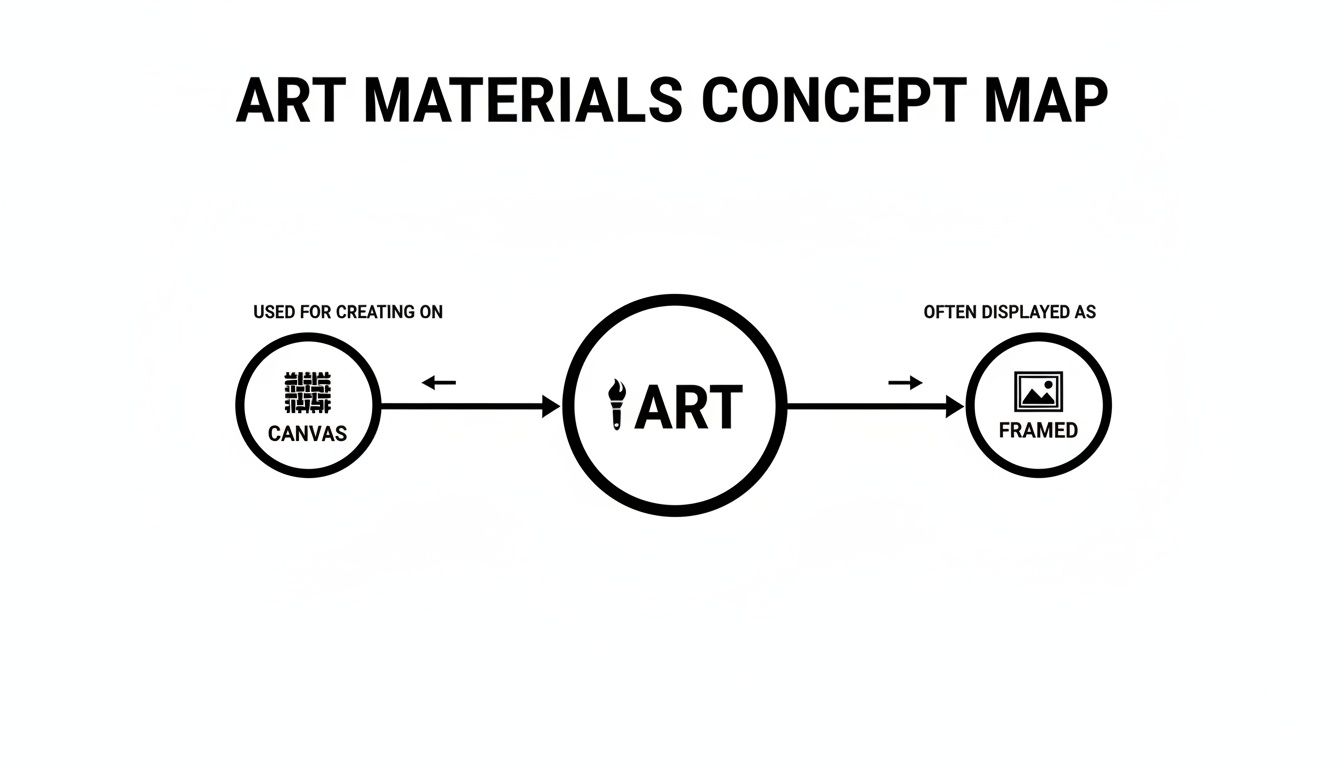
Whether you prefer the textured depth of a canvas or the crisp, clean lines of a framed print, the principles of a great arrangement are exactly the same.
The Single Statement Piece
A single, large-scale piece of car wall art is the quickest way to make a bold impact. It’s an instant focal point that commands attention. This approach is perfect for a "hero" piece—that stunning print of your all-time favourite race car or a panoramic map of a legendary circuit like the Nürburgring.
When you go for a single piece, size is everything. Seriously, don't be afraid to go big. A large print feels confident and deliberate, whereas a small one on a big wall can just look like a mistake.
The Curated Gallery Wall
A gallery wall is a collection of smaller pieces arranged together to create one cohesive display. It’s a fantastic way to tell a bigger story and showcase multiple passions at once. You could dedicate it to a single driver's career, a series of your favourite racetracks, or even a mix of car prints that share a similar colour scheme.
There are a couple of ways to tackle a gallery wall:
- Grid Layout: This is where you arrange pieces of the same size in a symmetrical grid. It creates a very clean, organised, and modern look. A grid of four or six circuit maps, for example, looks incredibly sharp in a home office.
- Organic Layout: This style is more relaxed, mixing different sizes, orientations, and even frame styles. The trick is to keep one element consistent to tie it all together—like a common colour in each piece or a uniform frame colour. For some great tips on this, our guide on dining room wall decor has plenty of ideas you can borrow.
Pro tip for gallery walls: lay all your pieces out on the floor first. Move them around until you find a layout that feels balanced. You can even trace each frame onto paper, cut out the shapes, and tape them to the wall to see exactly how it will look before making any holes.
The Dynamic Triptych
A triptych is a set of three related pieces of art displayed side-by-side. It’s a great middle-ground, offering more visual punch than a single piece but feeling more structured than a full gallery wall. It works exceptionally well for creating a panoramic effect, like splitting a wide shot of a racetrack across three canvases.
When hanging a triptych, the spacing is key. Leave a consistent gap of about 2-3 inches between each panel. This gives each piece its own space to breathe while still feeling connected as a whole. It’s a layout that adds instant rhythm and sophistication to any room.
Weaving Car Art into Your Home Decor

Successfully bringing your love for motorsport indoors is all about bridging the gap between fandom and thoughtful interior design. The goal is to make your car wall art feel intentional and stylish, ensuring it elevates your space rather than clashing with it. The secret? Treat it just like any other piece of art.
This means looking at your room’s existing colour palette, furniture, and overall vibe. Think of it like matching a tie to a suit—the artwork should complement its surroundings. A sophisticated piece of motorsport art can absolutely lift a room, proving that a passion for racing and great taste can go hand in hand.
And the appetite for this is huge, especially here in Australia where car culture is deeply ingrained. In 2024 alone, Aussies bought a staggering 1,237,287 new vehicles, showcasing a massive population of enthusiasts who are ready for premium, motorsport-themed decor.
Styling for Different Spaces
How you hang your car wall art really depends on the room. What works for a chilled-out fan cave won’t necessarily fly in a more formal living room. Here’s how you can tailor your approach to different corners of your home.
In a living room, your art needs to work in harmony with everything else. A minimalist black-and-white print of the Monaco circuit, for instance, can blend seamlessly into a modern, neutral space. It becomes a subtle nod to your passion without screaming for attention.
Got a living room with warmer tones? Consider a piece with a vintage feel, like a retro-style print of a classic Le Mans poster. You’re looking to create a focal point that feels both personal and polished. For more ideas on getting this right, check out our guide on auto wall art.
The Home Office and Fan Cave
A home office is the perfect spot for motorsport art that inspires focus and drive. Racetrack circuit maps are an excellent choice here. Their clean lines and technical nature add a professional, architectural feel to the space without being distracting.
A curated gallery of your favourite circuits above a desk creates a backdrop that is both motivating and personal. It’s a way to keep your passion close while you get the job done.
Now, for the fan cave or garage, you can be much bolder. This is where you build a fully immersive experience.
- Go Big: Use large-scale action shots or detailed car prints to create maximum impact.
- Tell a Story: Dedicate an entire wall to a single driver, team, or racing era to build a powerful narrative.
- Mix Media: Combine canvas prints, framed photos, and even authentic memorabilia for a rich, textured display.
In these dedicated spaces, the art isn’t just an accent—it is the decor. It’s your chance to go all-in and create a true sanctuary that celebrates every aspect of your love for motorsport, turning a simple room into the ultimate enthusiast’s retreat.
A Practical Guide to Installation and Care
Your new car wall art has arrived. Now for the exciting part—getting it on the wall where it belongs. Think of this as the final pit stop before the victory lap. A little bit of care during unboxing and hanging goes a long way to making sure your investment looks incredible for years to come.
When you unbox it, always handle your print by its edges to avoid fingerprints and lay it on a clean, soft surface while you get ready. This preserves the vibrancy of that iconic livery or the clean lines of your favourite circuit right from the start.
Keeping Your Motorsport Art Pristine
Maintaining your artwork is simpler than a tyre change, I promise. The golden rule is to avoid harsh chemicals at all costs, as they can strip the print's surface and cause those beautiful colours to fade over time.
For both canvas and framed prints, a gentle touch is always best:
- Regular Dusting: Your go-to cleaning method should be a soft, dry microfibre cloth to lightly wipe away any dust.
- Canvas Care: If your canvas needs a little extra attention, you can use a cloth that is very slightly dampened with water—but never wet.
- Framed Print Care: The acrylic or glass on framed art can be cleaned with a dedicated cleaner, but here's a pro tip: spray it onto the cloth first, not directly onto the surface.
Your artwork’s biggest enemy is direct sunlight. UV rays can cause serious fading over the years, so try to hang your pieces on a wall that doesn’t get blasted by hours of harsh, direct sun each day.
Foolproof Installation Tips
Hanging your car wall art perfectly straight doesn’t require a full pit crew. First up, choose the right hardware. For a standard Aussie plasterboard wall, a picture hook with a nail is usually all you need for most sizes. If you’ve got a heavier piece or you’re dealing with brick, you’ll want a wall plug and screw for a rock-solid hold.
Once you have your spot marked out, grab a spirit level to ensure your hook is perfectly horizontal. For larger pieces with two D-rings, just measure the distance between them, mark two corresponding points on the wall with your level, and install your hooks. This simple step guarantees your art hangs straight and stays that way, perfectly showcasing your passion.
Answering Your Car Wall Art Questions
Jumping into the world of car wall art can bring up a few questions, especially when you’re hunting for that perfect piece to match your space and your passion. I get it. To give you a bit more clarity and confidence, I’ve put together answers to some of the most common queries we hear.
What Style of Car Wall Art Is Best for an Office?
When it comes to a professional office setting, the trick is to find art that feels sophisticated without creating a visual distraction. Less is definitely more here. Think clean, modern aesthetics that give a nod to your passion for motorsport without screaming it.
Racetrack circuit maps are a fantastic option, especially in a simple monochrome colour scheme. They have this cool, architectural feel that just works in a workspace. Pair one with a clean black or natural wood frame, and you've got a touch of instant elegance. A single, large statement piece behind your desk or a small, curated gallery of your favourite circuits on a side wall is a great way to keep things professional yet personal.
How Do I Start a Car Wall Art Collection?
Starting a collection is all about you—it’s a personal journey that should begin with a theme that genuinely gets you excited. This idea is the glue that will hold your display together. Maybe you want to focus on your favourite driver's career, a specific racing era like the wild Group B rally cars, or all the circuits from a single Formula 1 season.
A great way to get the ball rolling is to pick a 'hero' piece—a big, captivating print of your all-time favourite car or track. This becomes the anchor for your entire collection. From there, you can build outwards, adding smaller, complementary pieces over time as you find them.
A pro tip: unifying your collection with a consistent frame style, colour palette, or even print size is a powerful strategy. It makes the whole display look intentional and seriously impressive as it grows.
Are Canvas or Framed Prints More Durable?
Honestly, both canvas and framed prints are built to last, but they have different strengths. The best choice really comes down to where you plan on hanging the art and what your personal style is.
High-quality canvas prints are incredibly tough. The material itself is robust, and the inks we use are UV-resistant to stop any fading over time. One of the biggest perks is that there’s no glass, which means zero risk of shattering. This makes canvas a super safe and practical option for high-traffic spots like hallways or living rooms.
Framed prints, on the other hand, get their protection from the acrylic or glass pane. This layer shields the print from dust, moisture, and curious fingers. The frame itself adds a bit of extra structural integrity, too, protecting the corners and edges of the artwork. At the end of the day, both are excellent, long-lasting choices for showing off your favourite car wall art.
Ready to find that perfect piece to kickstart your collection? At TrackNation, we offer a premium selection of motorsport-inspired art designed for enthusiasts like you. Explore our collections and bring the thrill of the track into your home or office. Start your collection today at https://tracknation.au.