

Experience the Monaco Grand Prix: monaco grand prix lifestyle & circuit guide
Let's be clear: the Monaco Grand Prix isn't just another race on the calendar. It's the most prestigious, most demanding, and most glamorous event in all of Formula 1. This is the race that forms one-third of the legendary 'Triple Crown of Motorsport,' cementing its place as a true icon of global motor racing.
The Crown Jewel of Motorsport
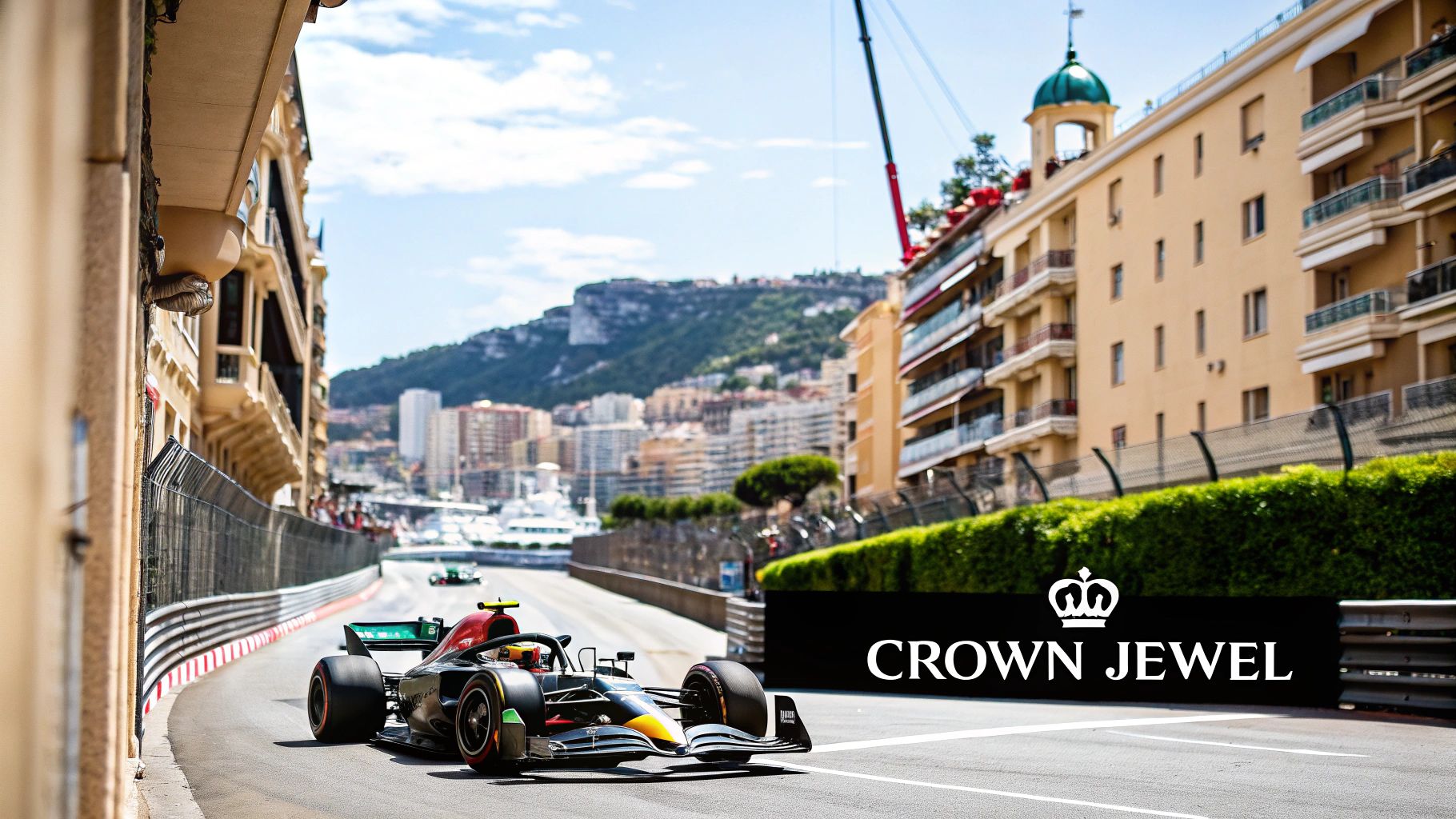
Welcome to the ultimate test of a driver's skill, bravery, and nerve. The Monaco Grand Prix is a high-stakes duel fought on the impossibly narrow, twisting streets of Monte Carlo. Out here, precision is everything. The unforgiving barriers leave absolutely zero room for error.
One tiny mistake doesn't just cost you a position; it almost always means the end of your race. Simple as that.
This unique, pressure-cooker environment creates an intensity that no other circuit can even come close to matching. The blend of a brutally tight, technical layout with a backdrop of pure glamour is what makes winning here the single most coveted achievement for any driver. It's a place where legends are born and legacies are sealed.
At Monaco, it's a pure display of driving talent. Raw car performance takes a backseat to a driver's ability to thread the needle through a treacherous concrete labyrinth with millimetre-perfect accuracy. It’s the one race every single driver dreams of winning.
Why Monaco Stands Alone
The magic of the Monaco Grand Prix goes far beyond the racetrack itself. It's a one-of-a-kind fusion of sporting greatness and high-society elegance, drawing in celebrities, royalty, and motorsport purists from all over the globe. The event's deep cultural impact has been built over nearly a century of incredible history.
So, what gives it this special status? It boils down to a few key things:
- The Unforgiving Circuit: A temporary street track where drivers pilot their cars through impossibly tight corners, blast past luxury yachts, and scream through a world-famous tunnel. It’s utterly unique.
- Immense Prestige: For many, winning in Monaco is seen as an even greater achievement than winning the World Championship itself. It places the victor in an elite club of motorsport legends.
- Historical Significance: As a cornerstone of the F1 season, its history is woven into the very fabric of the sport’s evolution, creating a story that captivates fans generation after generation.
This powerful combination of history, challenge, and glamour makes the race a true spectacle. Capturing that iconic atmosphere is something many of us aspire to, often finding inspiration in stunning Formula One wall art to bring a piece of the magic home.
A Legacy Forged on Monte Carlo's Streets
The story of the Monaco Grand Prix doesn’t start with a championship, but with a seriously bold idea. Back in the late 1920s, a wealthy cigarette manufacturer named Antony Noghès decided to create a race so absurdly difficult and prestigious that it would force the world to recognise the Automobile Club de Monaco. The concept of holding a Grand Prix on the tight, winding roads of a tiny principality was nothing short of audacious.
This wasn't some purpose-built circuit with generous run-off areas. It was a treacherous ribbon of asphalt snaking its way past the city's most famous landmarks. The first-ever race roared to life in 1929, an invitation-only affair won by William Grover-Williams in a Bugatti. It was an instant hit, proving that a world-class motor race could not only exist but thrive in the most improbable setting imaginable.
From Daring Idea to Global Icon
While the event was an immediate success, its place in motorsport legend was truly cemented when it joined the first-ever Formula One World Championship in 1950. After a short break, it was back for good in 1955 and has been a non-negotiable part of the F1 calendar ever since—a testament to its magnetic appeal and brutal challenge.
The Monaco Grand Prix is more than just a race; it's a living piece of motorsport history. Every single corner holds nearly a century of stories—of heroic victories, heartbreaking defeats, and the relentless quest for perfection against impossible odds.
This is the history that sets Monaco apart. It’s a place where the ghosts of legends like Fangio, Hill, and Stewart still feel ever-present, their triumphs and struggles practically etched into the city's streets. The race is a direct line back to the golden age of motorsport, preserving a raw, old-school challenge in the modern era of Formula 1.
A Timeline of Triumph
The Monaco Grand Prix is one of the oldest and most revered motorsport events on the planet. First held in 1929, it has been run almost every year for over nine decades, weaving a rich historical tapestry that connects with fans and collectors alike. The unique 3.337 km street circuit, famous for its slow speeds but immense prestige, offers a perfect canvas for celebrating motorsport’s heritage. These milestones are often captured in art, with map-style canvases detailing corner names and landmark dates becoming prized possessions for enthusiasts. For more on the race's incredible story, you can explore the history of the Monaco Grand Prix here.
The race's journey mirrors the evolution of the sport itself:
- 1929: The very first race is held, establishing the circuit's legendary and unforgiving layout.
- 1950: Monaco is officially included in the inaugural Formula One World Championship season.
- 1960s: Graham Hill stamps his authority on the streets, earning the nickname "Mr. Monaco" with five incredible victories.
- 1980s-90s: Ayrton Senna achieves a record six wins, cementing his status as the undisputed master of Monte Carlo.
This incredible timeline shows how the Monaco Grand Prix hasn't just survived but has flourished, solidifying its place as the ultimate driver's challenge and the undisputed crown jewel of the Formula 1 calendar.
Decoding the Legendary Circuit de Monaco
To truly get what the Monaco Grand Prix is all about, you first need to understand the beast it’s run on. The Circuit de Monaco isn't a racetrack in the traditional sense. It's a tight, twisting ribbon of asphalt draped over city streets, hemmed in on all sides by unforgiving steel barriers. There is absolutely no room for error. Think of it less like a modern circuit and more like threading a needle at over 290 km/h.
A single lap is a non-stop, relentless test of a driver's concentration. From the very first corner, they are pushing the absolute limit. It all kicks off with Sainte Dévote, a tight right-hander that has claimed countless victims over the decades and sets the tone for the brutal challenge ahead.
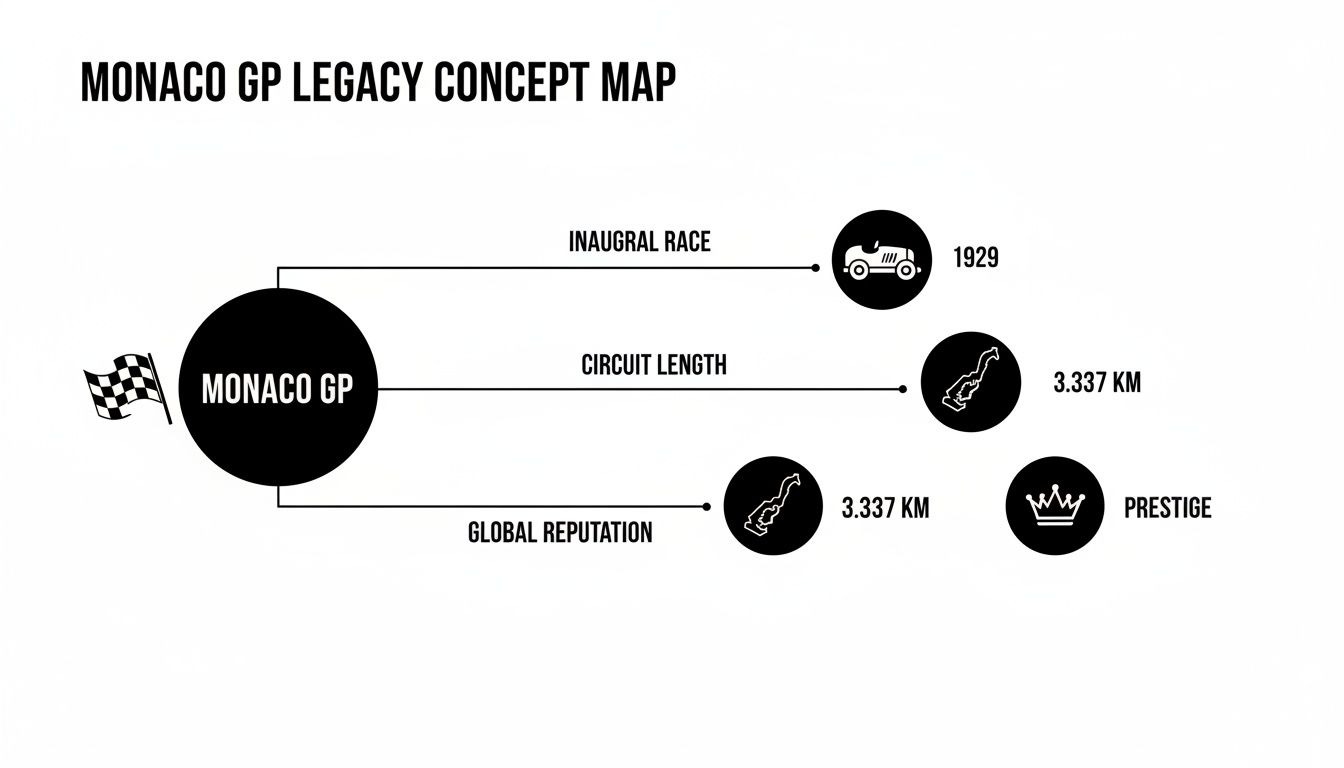
This map nails the core elements that define the Monaco legend – its deep history, incredibly compact layout, and unmatched prestige. From its first race way back in 1929 to its tiny 3.337 km length, every single detail adds to its status as the crown jewel of motorsport.
A Tour of Iconic Corners
If a driver makes it through Sainte Dévote unscathed, they immediately start the steep climb up the hill towards the world-famous Casino Square. This glamorous section demands immense precision as the cars dance around the iconic landmark. It's a sequence immortalised in motorsport history and a hugely popular subject for enthusiasts looking to capture the circuit's unique character through racetrack framed prints.
Next up is the run down to Mirabeau and then into the slowest corner in all of Formula 1: the Fairmont Hairpin. Here, the cars are practically crawling at just 50 km/h, forcing drivers to use full steering lock in a manoeuvre that feels almost impossibly tight for a modern F1 car.
From the hairpin, the circuit dives into the famous Tunnel section. Plunging from bright sunlight into relative darkness and then rocketing back out again at full throttle is incredibly disorienting. This high-speed blast is one of the very few places to build momentum before slamming on the brakes for the Nouvelle Chicane – a critical, if incredibly risky, overtaking opportunity.
The table below breaks down some of the most famous turns that make Monaco so special.
| Corner Name | Key Challenge | Historical Significance |
|---|---|---|
| Sainte Dévote | A tight, unforgiving right-hander at the end of the main straight. Often the site of first-lap chaos. | Named after the patron saint of Monaco. A frequent point of drama and race-altering incidents. |
| Casino Square | A fast, blind crest and sweeping right-hander that requires total commitment. | One of the most glamorous and photographed sections in all of motorsport, passing the Monte Carlo Casino. |
| Fairmont Hairpin | The slowest corner on the F1 calendar, demanding maximum steering lock at just 50 km/h. | A true technical test where drivers can lose significant time. Originally named Loews Hairpin. |
| The Tunnel | A high-speed, curving tunnel that challenges drivers with a sudden change in light and aerodynamics. | The only tunnel section in F1. The exit leads directly into the hard braking zone for the chicane. |
| Piscine (Swimming Pool) | A fast left-right chicane followed by a tight right-hander around the Rainier III Nautical Stadium. | Famous for its proximity to the water and for punishing even the slightest error with a trip into the barriers. |
| La Rascasse | A very tight right-hand hairpin just before the final corner. | Named after the bar on the inside of the turn, it’s a classic spot for late-race moves and mistakes. |
Each of these corners tells a story, contributing to the rich tapestry of Monaco's racing history.
The Ultimate Test of Precision
The final parts of the lap are just as demanding, featuring the swimming pool complex (Piscine) and the tight, technical sequence of La Rascasse and Antony Noghès. Every single corner presents a unique challenge, requiring a perfect blend of aggression and pinpoint control.
So, why is it all so difficult? A few key factors make this circuit the ultimate test:
- Extreme Narrowness: The track is barely wide enough for one car in many places, making side-by-side racing a near-impossible dream.
- No Run-Off Areas: Unlike purpose-built tracks, Monaco has solid barriers right at the edge of the circuit. The smallest mistake almost always results in a race-ending crash.
- Constant Adjustments: The surface isn't smooth asphalt; it's bumpy, uneven city streets. Drivers are constantly fighting the car just to keep it pointing in a straight line.
Mastering these streets requires so much more than just raw speed. It demands a deep, almost instinctual connection between driver and machine. Just finishing the Monaco Grand Prix is an achievement in itself; winning it solidifies a driver’s place among the true legends of the sport.
The Masters of Monaco and Their Unforgettable Moments
Winning the Monaco Grand Prix is a career-defining moment. But to win it multiple times? That’s what elevates a driver to true legend status. A select few have shown such a profound connection with this punishing circuit that their names are now woven into its very fabric, having mastered its unique rhythm year after year.
These aren't just winners; they're the undisputed masters of Monte Carlo. Their dominance goes far beyond simple statistics. It reflects a deep, almost intuitive feel for how to wring every last bit of performance from their car while dancing millimetres from the barriers. They are the drivers who tamed the untameable and turned these streets into their personal playground.
The Kings of the Principality
When you talk about Monaco mastery, three names instantly come to mind. Each one defined an era with their incredible skill and repeated success on motorsport’s most demanding stage.
-
Graham Hill: Known affectionately as "Mr. Monaco," Hill conquered the circuit an incredible five times during the 1960s. His smooth, impossibly precise driving style was perfectly suited to the track's relentless challenges, making him the original king of the Riviera.
-
Michael Schumacher: Matching Hill's incredible record, Schumacher also claimed five victories here. His famously analytical approach and relentless consistency allowed him to dominate Monaco during his championship-winning years with both Benetton and Ferrari.
-
Ayrton Senna: The undisputed master. Senna’s record of six wins remains the benchmark for greatness. His performances, especially in qualifying, were often described as something spiritual, pushing the absolute boundaries of what was thought possible around this circuit.
Senna's 1988 qualifying lap is still talked about as perhaps the greatest single lap in Formula 1 history. He was a staggering 1.427 seconds faster than his teammate and rival, Alain Prost. He later explained it felt like he was driving on pure instinct, as if he was operating in another dimension entirely.
Moments Etched in F1 Folklore
Beyond the outright victories, Monaco is famous for the dramatic, unforgettable moments that have become part of F1 lore. Who could forget 1996, when Olivier Panis won from 14th on the grid in torrential rain? It was a feat considered almost impossible at a track where overtaking is notoriously difficult. In fact, only three cars even finished that chaotic race.
More recently, the circuit has seen incredible performances from a new generation of talent. While not yet a master on the level of Senna, rising stars are making their mark. You can learn more about drivers like Oscar Piastri and his journey in Formula 1 as they take on this legendary event. Every race adds another chapter to Monaco's incredible story, cementing its status as the ultimate test of a driver's legacy.
How to Experience the Monaco Grand Prix
For any true motorsport fan, experiencing the Monaco Grand Prix is a proper bucket-list item. Whether you’re lucky enough to be there in person or glued to your screen at home, the whole weekend is a spectacle unlike any other. It’s an event where the electric atmosphere buzzing through the Principality is just as thrilling as the action on the track.
The race weekend itself has a unique rhythm. For years, Monaco kicked things off with practice sessions on Thursday, a departure from the usual Friday-to-Sunday format of other Grand Prix. While the schedule has been modernised recently, that sense of a long, four-day festival still hangs in the air. The city comes alive with anticipation, and you can feel the energy on every street corner and in every café.
Attending the Race in Person
If you're planning on making the trip, get ready for an intense but totally unforgettable experience. Monaco's tiny size creates a one-of-a-kind environment where the entire city feels like it’s part of the paddock. Just navigating the crowds is an adventure in itself, as hundreds of thousands of fans pour into the circuit.
The Monaco Grand Prix pulls in crowds that seem impossible for the Principality's small footprint. Recent years have seen weekend attendance figures hitting around 200,000, and some reports are even tipping record numbers for upcoming races. This incredible density of fans creates a massive demand for everything from hospitality to merchandise. You can see just how massive the numbers are in this analysis of Monaco's attendance figures.
Figuring out where to watch from is absolutely critical. Your options run the gamut from grandstands offering specific views to general admission on the famous "Le Rocher" hill. For a truly glamorous experience, many go for the VIP hospitality packages on yachts or private balconies overlooking the most iconic parts of the circuit.
Maximising Your Viewing Experience From Home
Don't worry, watching from home can be just as exhilarating if you do it right. The key is to completely immerse yourself in the weekend's narrative. Make sure you follow the practice and qualifying sessions; they’re essential for understanding who has the pace and just how vital pole position is at this notoriously tight circuit.
The real magic of watching Monaco on TV is appreciating the sheer precision of it all. The on-board cameras give you a visceral sense of just how frighteningly close the drivers are to the barriers at every single moment—something you can sometimes miss when you’re watching from a grandstand.
To really get into the spirit, think about gearing up. The right apparel can make you feel that much closer to the action, and our guide to Formula 1 clothing has some great ideas to help you show your support.
Whether you're there in person or watching from afar, the Monaco Grand Prix is an event that truly captures the heart and soul of motorsport.
Bring the Legend Home with Monaco Inspired Wall Art
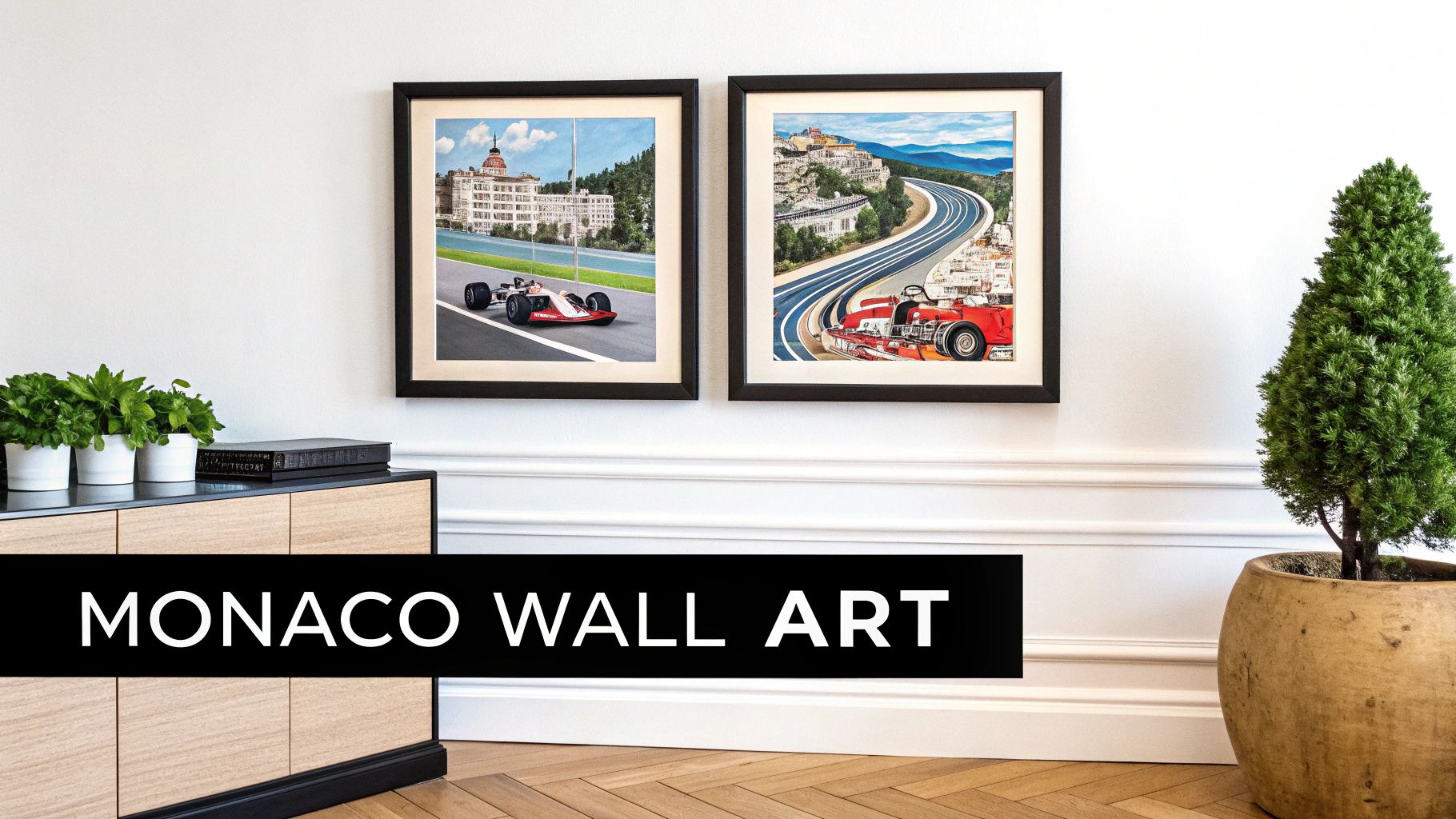
The buzz of the Monaco Grand Prix doesn’t have to end when the chequered flag falls. You can keep that incredible atmosphere alive all year round by bringing a piece of the principality's racing spirit into your own space. Motorsport wall art is a fantastic, tasteful way to celebrate your passion.
The options are endless, from minimalist maps tracing the circuit’s infamous layout to vibrant, retro posters that capture the glamour of its golden age. These pieces turn a weekend passion into a striking statement, creating an instant focal point in any room.
Curating Your Motorsport Style
Choosing the right piece is all about matching the art to your space and your own personal style. For a clean, modern look in a home office or living room, you can't go past a minimalist track outline. These designs manage to capture the circuit's complex geometry without overwhelming the rest of your decor.
Something like a Circuit de Monaco framed canvas print that highlights the key corners can turn a simple map into a great conversation starter for any other fans who spot it. On the other hand, for a garage or a dedicated fan cave, a more dynamic, action-packed print is perfect for capturing the raw energy of the race itself.
The Monaco Grand Prix isn't just a race; it's a global phenomenon. That fascination fuels a huge demand for memorabilia, giving fans a way to own a tangible piece of motorsport history and show their connection to the sport’s most prestigious event.
And that global audience just keeps growing. To give you an idea, recent live television figures in the U.S. for the Monaco race showed an average audience of nearly 2 million viewers. Brands that supply premium motorsport canvases often see massive traffic spikes during and after the race, as inspired fans look to capture that excitement for their own walls. You can read more about the impact of broadcast viewership on motorsport merchandise here.
Styling Tips for Your Space
Getting your new artwork to look great is simple with a few key ideas. Just follow these tips to make your piece truly stand out:
- Create a Gallery Wall: Why stop at one? Combine a circuit map with photos of legendary drivers or vintage race posters to tell a richer story.
- The Rule of Thirds: Try positioning the artwork slightly off-centre on a wall. It creates a more visually engaging and balanced look than hanging it smack-bang in the middle.
- Consider the Scale: A large, statement piece works brilliantly above a sofa or a desk, while smaller prints can look fantastic grouped together.
By thoughtfully picking and styling your Monaco-inspired art, you’re not just decorating a wall—you’re building a personal tribute to the absolute pinnacle of motorsport.
Got questions about the Monaco Grand Prix? You’re not the only one. Let's tackle a few of the most common queries to give you a deeper appreciation for what makes this race so special.
Why Is Overtaking So Difficult at Monaco?
You've probably heard commentators say it a million times, but it’s true: overtaking at Monaco is next to impossible. The simple reason is that the track is ridiculously narrow and hemmed in by unforgiving steel barriers. There are virtually no run-off areas.
Unlike modern circuits designed with long straights and wide corners to encourage passing, Monaco is a relic of a bygone era. One tiny mistake, one slight misjudgement, and a driver's race is over, usually with a hefty repair bill. This is exactly why qualifying is so critical here – a high grid position is more than half the battle won.
What Is the Triple Crown of Motorsport?
The Triple Crown of Motorsport is one of those unofficial but hugely respected achievements in racing. It’s for the driver who can conquer three of the most prestigious and completely different motorsport events on the planet.
- Indianapolis 500: The pinnacle of American open-wheel oval racing.
- 24 Hours of Le Mans: The ultimate test of driver and machine endurance.
- Monaco Grand Prix: The undisputed jewel in the Formula 1 crown.
To this day, the legendary Graham Hill is the only driver in history to have ticked all three boxes. It’s a feat that truly solidifies a driver’s place among the all-time greats.
"Winning the Triple Crown is a true mark of a driver's versatility and greatness. It proves they can master completely different types of cars and circuits at the highest level of competition."
Are There General Admission Tickets for the Race?
Yes, but with a big catch. Monaco offers a very limited general admission area known as 'Le Rocher,' which is essentially a spot on a steep, grassy hill. The views are restricted, it gets incredibly crowded, and you’ll need to get there at the crack of dawn to claim a decent vantage point.
For a better experience, most fans opt for grandstand seats. Of course, the iconic way to watch is from a private balcony or a yacht in the harbour, but those come with exclusive hospitality packages and a price tag to match, all part of what makes Monaco so famously glamorous.
At TrackNation, we bring the thrill of the circuit into your home. Explore our collection of premium motorsport wall art, including detailed prints of the legendary Circuit de Monaco, and find the perfect piece to celebrate your passion for racing. Discover your next statement piece today at TrackNation.