

Albert Park Track Map A Driver's Guide To The F1 Circuit
Look at a map of the Albert Park circuit and you’ll see something special: a fast, flowing street track that hugs the contours of a picturesque lake. It’s not a permanent, purpose-built facility. Instead, it’s pieced together every year from public roads just for the Australian Grand Prix, creating a one-of-a-kind challenge for the drivers.
Decoding The Melbourne Grand Prix Circuit
The Albert Park track map is much more than just a series of lines on a page; it’s the blueprint for one of Formula 1’s most anticipated season openers. Because it’s a temporary circuit, the track surface is often quite "green" and slippery at the start of the race weekend. This forces drivers to be incredibly precise as they learn the limits all over again.
Since it first hosted the race back in 1996, taking over from Adelaide, Albert Park has cemented its place as an iconic F1 venue. The track snakes its way over 5.303 kilometres and throws a technical mix of 14 corners at the drivers.
Recent changes in 2022 really dialled up the speed, making it one of the fastest circuits on the entire calendar. Cars now hit an average lap speed of around 250.3 km/h, thanks in part to four DRS zones strategically placed to encourage more overtaking.
Let's break down the core stats that define this unique track.
Albert Park Circuit At A Glance
Here’s a quick rundown of the essential numbers that shape the racing action in Melbourne.
| Statistic | Figure |
|---|---|
| Track Length | 5.303 km (3.295 miles) |
| Number of Corners | 14 (8 right, 6 left) |
| DRS Zones | 4 |
| Race Laps | 58 |
These figures paint a clear picture of a circuit that demands both raw power and technical skill.
At its heart, Albert Park is a high-speed street fight. Its combination of rapid straights and committed, flowing corners tests both car setup and driver bravery, making it a spectacular curtain-raiser for the F1 season.
This blend of raw pace and technicality is exactly why the Melbourne Grand Prix is a firm fan favourite. If you're keen to understand how circuits like this have shaped the sport over the decades, you can dive into the rich history of F1 in our detailed article. It provides some fantastic context on F1's evolution.
A Corner-By-Corner Lap Of Albert Park
To really get a feel for the Albert Park track map, you need to slip into the driver's seat. It's a circuit with a beautiful, flowing rhythm where one corner bleeds into the next. This demands absolute precision and a whole lot of confidence, especially with those unforgiving barriers lurking just metres away, ready to punish the smallest error.
The lap kicks off with a massive blast down the main straight before the drivers slam on the brakes for Turn 1. This tight right-hander, named Jones, is a classic spot for an overtake. You'll often see drivers lunge down the inside, but the real key is the exit—get it right, and you’re set up perfectly for the fast, sweeping Turn 2.
Next up is one of the trickiest sequences on the entire circuit: the Turn 3-4 chicane. Drivers have to flick the car right, then immediately left, scrubbing off speed while desperately trying to maintain momentum. Nailing the exit here is critical for the short squirt towards the gentle curve of Turn 5, which is taken almost flat-out.
Navigating The Lakeside Section
From there, the circuit really opens up as the drivers hurtle towards the reprofiled lakeside section. Turn 6 is a medium-speed right-hander that demands careful throttle control to stop the car from washing out wide. It's immediately followed by the quick-fire left-right of Turns 7 and 8, a sequence that truly tests the car's aerodynamic balance.
Then you hit the game-changer. The old, slow chicane that used to be here was ripped out, creating a breathtaking, flat-out blast through what are now Turns 9 and 10. Drivers are foot-to-the-floor, their commitment tested as they sweep left and then right at incredible speeds, building up for the heavy braking zone into Turn 11. This single change completely transformed the character of a lap around Albert Park.
This little graphic breaks down the key stats of the circuit.
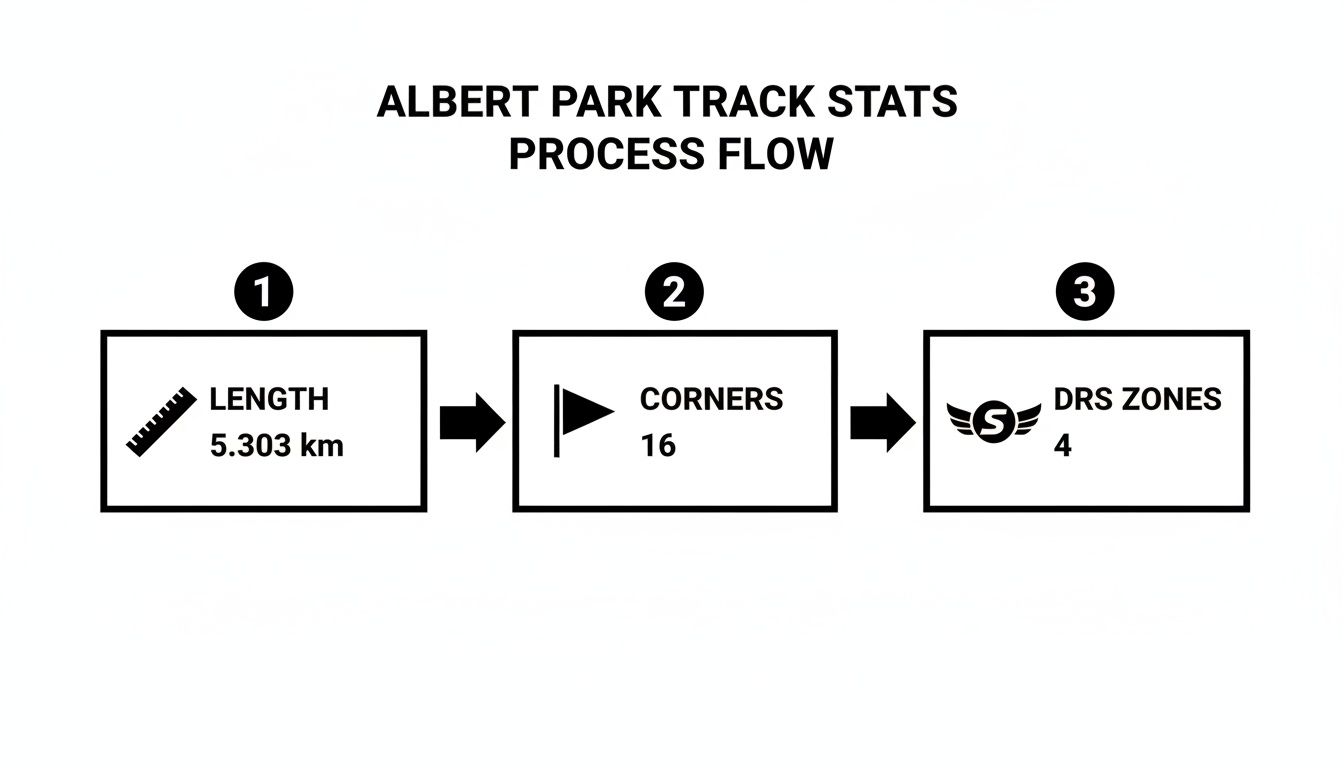
These numbers show you exactly what makes this track so special: a long layout, a decent number of corners, and multiple DRS zones that all come together to produce the thrilling racing we see in Melbourne.
The Final Push To The Finish Line
After muscling the car through the tight Turn 11—another prime overtaking spot—drivers get hard on the power through the flowing Turn 12. This corner is all about positioning, setting them up for the final two corners: a pair of challenging right-handers that demand patience and laser-focused precision.
- Turn 13 (Ascari): This penultimate corner is deceptively difficult. Drivers have to brake hard and turn in sharply, trying to carry as much speed as they dare without sliding wide onto the exit kerb.
- Turn 14 (Senna): The final corner is all about one thing: the exit. A good run out of here is absolutely essential for maximising speed down the long pit straight, whether you’re attacking the car ahead or defending from behind as you cross the line.
A perfect lap around Albert Park is like a dance. It’s all about finding that rhythm through the chicanes and being brave through the high-speed sections, all while wrestling a car on the slick surface of a street circuit. It rewards precision but will bite back hard if you get overconfident.
Every corner presents its own unique test, which is why this track is such a favourite for drivers and fans alike. Its complexity is right up there with other legendary Aussie circuits. If you're keen to explore another iconic layout, check out our guide to the Mt Panorama circuit map. Understanding these little details is what transforms watching a race from a spectacle into an appreciation of calculated, high-speed artistry.
Where The Race Is Won: Overtaking Hotspots
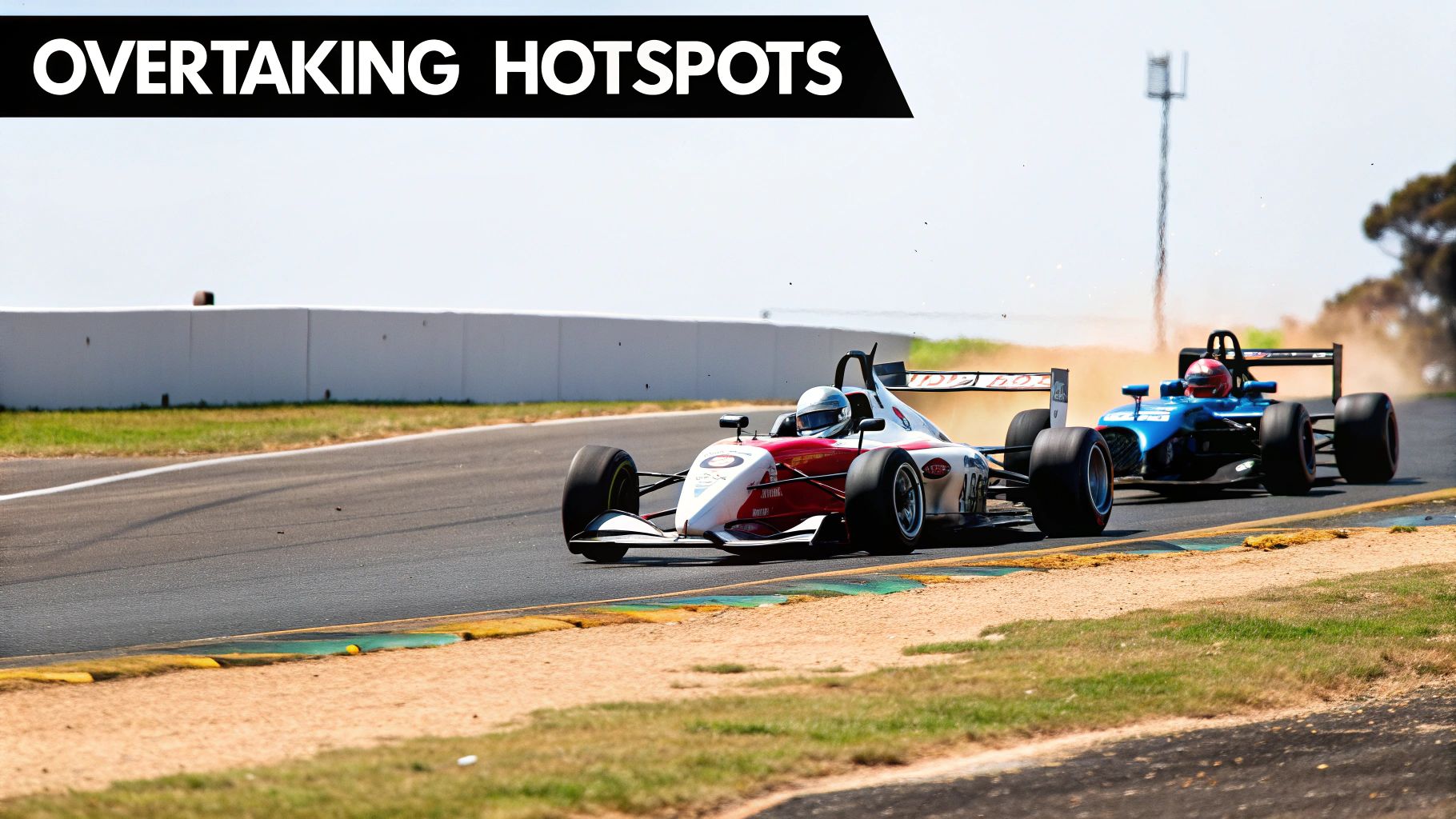
A good Albert Park track map shows you more than just the corners—it reveals the battlegrounds where races are truly decided. While a brave driver can make a move anywhere, the circuit’s four Drag Reduction System (DRS) zones are the official arenas for high-speed combat. These are the long straights where a chasing driver gets a serious speed advantage, letting them slingshot past their rival into the next big braking zone.
Think of DRS as a tactical power-up. If a driver is within one second of the car ahead at a specific detection point, they can flick a switch to open a flap on their rear wing. This simple action slashes aerodynamic drag, boosts their top speed, and turns a long straight into a high-stakes game of chess at over 300 km/h. These zones are where Albert Park’s most dramatic moments unfold, and understanding them is key to following the race strategy.
The Prime Passing Locations
So, where does all the action happen? The most reliable overtaking spots are at the end of the longest straights, where drivers slam on the brakes from incredible speeds to navigate a tight corner. This massive difference in speed is what gives an attacking driver the perfect window to dive down the inside.
The charge down to Turn 1 (Jones) after the main straight is a classic passing opportunity. Likewise, the long, sweeping run into the Turn 3 chicane is another prime spot for a bold lunge. A bit further around the lap, the heavy braking zone for Turn 11 after the super-fast lakeside section is another major hotspot where drivers frequently go wheel-to-wheel.
The recent track changes, especially creating four DRS zones, have completely rewritten the playbook for racing at Albert Park. It's no longer just about getting a good qualifying lap; it’s about strategically using your car’s straight-line speed to attack and defend in these crucial zones.
But making a pass stick isn't just about raw speed. It demands perfect timing, a whole lot of bravery, and a deep understanding of racecraft.
- The Attack: An attacking driver has to be glued to the car in front through the previous corner to get the full DRS effect. Then, it's all about judging the braking point perfectly to get alongside and claim the inside line without locking up or sailing past the apex.
- The Defence: A defending driver will try to "break the tow" by positioning their car to disrupt the clean air flowing to the car behind. They might brake a fraction later or take a tight defensive line, sacrificing a bit of exit speed to keep their position safe.
This constant cat-and-mouse game is what makes the racing here so thrilling. While Albert Park is a fantastic circuit, you can see how it stacks up against the rest of the calendar by rating all the Formula 1 Grand Prix tracks in our big comparison. Every single overtake is a calculated risk, a battle of wits that plays out lap after lap in these critical zones.
How Track Changes Forged a Faster, Fiercer F1 Circuit
The Albert Park track map you see today is a completely different beast to the one that hosted races for decades. A massive overhaul back in 2022 was driven by a single, focused goal: create faster, more thrilling racing that would suit the new generation of Formula 1 cars. The result? A circuit that's undeniably quicker and serves up far more genuine overtaking opportunities.
This wasn't just a few minor tweaks here and there; it was a fundamental rethink of the track's entire character. Engineers and race officials poured over years of data, pinpointing the exact spots on the circuit that choked up the racing and killed any chance of a pass. Their solution was a series of bold, strategic moves that completely re-wrote the flow and rhythm of a lap around the lake.
The Chicane's Demise: A Game-Changer
The single biggest change was ripping out the tight, clumsy chicane at what used to be Turns 9 and 10. That section forced drivers to stomp on the brakes for a slow right-left flick, creating a concertina effect that made it impossible for cars to follow each other closely.
By replacing it with a breathtakingly fast, sweeping right-hand curve, the circuit now boasts a massive full-throttle blast along the back of the lake. This one modification sent average lap speeds soaring and introduced a brand-new high-speed challenge. Drivers now rocket towards the heavy braking zone for Turn 11 (the old Turn 13) at insane speeds, opening up another golden overtaking spot.
The core idea was simple: if you make it easier for cars to follow through the corners, you create more chances for them to battle on the straights. The 2022 changes were a masterclass in making that happen.
Reshaping Corners for Better Racing
On top of deleting the chicane, several other corners were widened and reprofiled to invite different racing lines and encourage proper wheel-to-wheel action.
- Turn 1: The entry to the very first corner was widened by a crucial 2.5 metres, giving drivers that little bit of extra elbow room to go side-by-side on the chaotic opening lap.
- Turn 6: This corner got a massive 7.5-metre expansion, allowing drivers to carry way more speed through the bend and down the following straight.
- Turn 13 (Ascari): The final corner sequence was also finessed, with a wider entry and a touch more camber to help hook the cars onto the ideal racing line.
These adjustments, paired with a full track resurfacing for the first time since 1996, have successfully morphed the Albert Park track map into a faster, more aggressive circuit. The changes have been a huge hit with the drivers, who love how much more enjoyable and challenging it is to drive, while the fans are just happy to see more action on track.
Choosing The Perfect Albert Park Wall Art
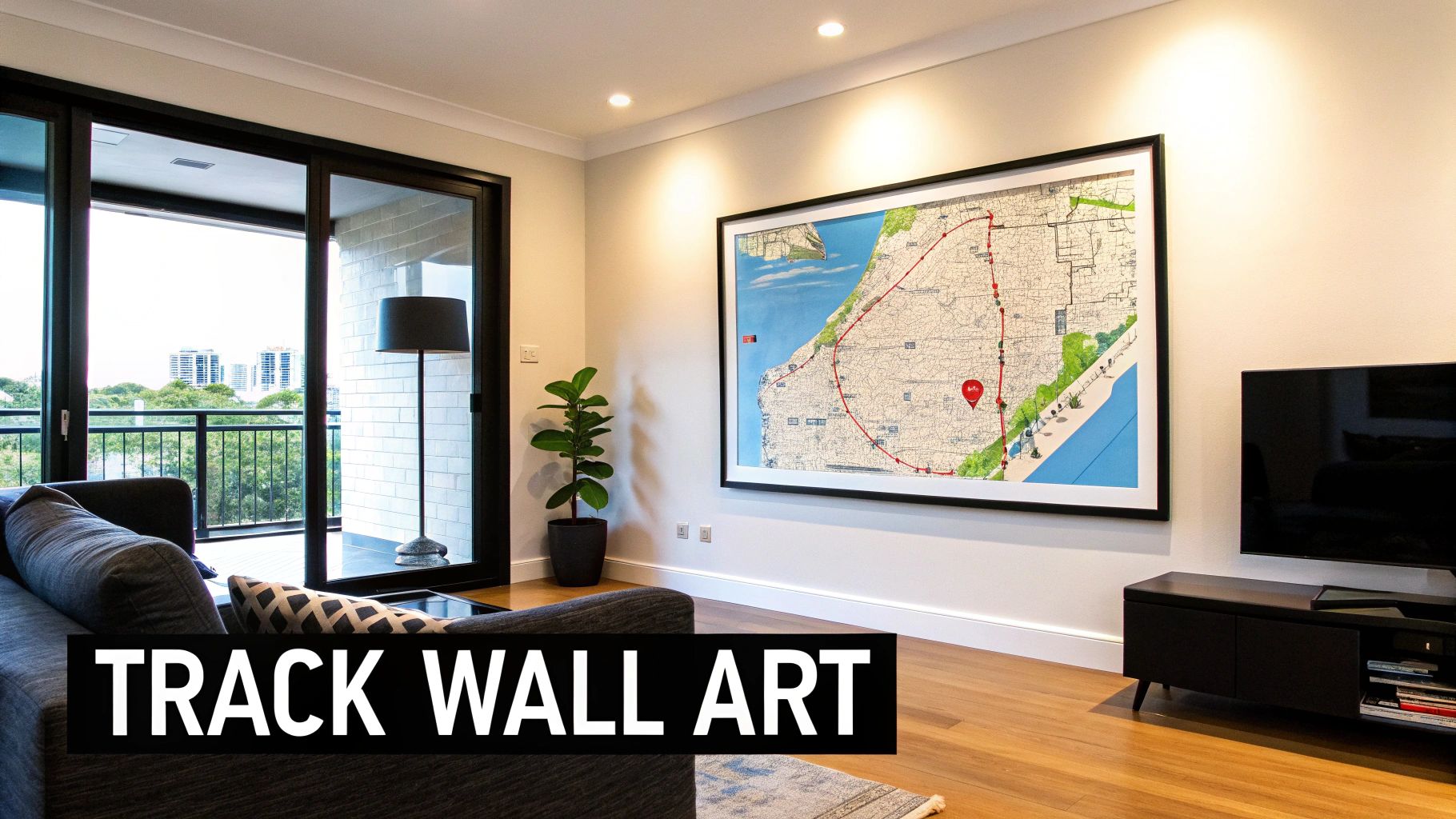
Bringing your passion for motorsport off the screen and into your home is one of the best ways to celebrate the sport. An Albert Park track map isn't just decoration; it's a conversation starter and a tribute to some of the most iconic moments in Australian racing history.
Choosing the right one can completely transform a wall, turning it into a gallery of speed and design. It’s all about finding a piece that speaks to your style.
The Albert Park circuit has such a distinctive layout, mixing raw street circuit vibes with proper high-speed sections. That unique flow translates beautifully onto canvas, capturing the essence of modern Formula 1 in a way few other tracks can. For more on its history, check out F1-Fansite.com.
Matching The Map Style To Your Space
First things first, what's the vibe you're going for? Track maps come in a few different styles, and each one sets a completely different mood.
-
Minimalist Design: Think clean lines and simple colours—often just black and white. This style is perfect if you’ve got a modern space and want to highlight the pure geometry of the circuit without any fuss. It looks brilliant in a home office or a sleek living room.
-
Detailed and Annotated: This one’s for the true enthusiast. These maps often include corner names, DRS zones, and key stats right on the print. It’s not just art; it’s an info-packed piece that’s bound to get conversations started about the track's biggest challenges.
Choosing the right track map is about more than just how it looks. It's about finding a piece that tells a story and connects with your love for motorsport.
Finding The Right Size And Frame
Once you’ve nailed down a style, it's time to think about scale and finish. You want the size of the artwork to be in proportion with the wall and the furniture around it. A massive statement piece can anchor an entire room, while a smaller print can be a cool, subtle nod to your favourite track.
And don't forget the frame! It’s just as important as the print itself.
- Classic Black Frame: You can't go wrong with this one. It's a timeless choice that gives a sharp, clean contrast and really makes the track layout pop. It works pretty much anywhere.
- Natural Wood Frame: This option adds a bit of warmth and texture, making it a great fit for spaces with a more rustic or organic feel.
- Clean White Frame: Perfect for creating a light, airy look. A white frame lets the track map stand out without competing for attention.
Picking the right piece really can elevate any room. If you're hunting for more ideas, you can explore a heap of different options in our comprehensive guide to Formula 1 wall art.
Experiencing The Melbourne Grand Prix Vibe
An Albert Park track map shows you where the cars go, but it can’t possibly capture the electric energy that floods Melbourne every race weekend. The Australian Grand Prix is so much more than just a race; it's a city-wide festival of speed and sound, and that atmosphere is a massive part of its legend.
This unique buzz is what turns a simple diagram of the circuit into a genuinely cherished piece of memorabilia. For fans, it’s a tangible symbol of an unforgettable experience, whether you were right there in the grandstands or just soaking up the festival vibe around the track.
The Power Of The Crowd
What truly makes this event special is the sheer passion of Australian motorsport fans. Attendance figures have absolutely skyrocketed in recent years, proving just how important the race is to our culture.
After its return in 2022, attendance soared past 400,000. By 2024, the event welcomed a record-breaking 452,055 spectators, selling out completely for the first time and becoming Melbourne's most attended sporting event ever. You can dive deeper into these impressive Australian Grand Prix race facts on GPDestinations.com.
This colossal support creates a buzz you can feel in every corner of the park. It's this shared excitement that makes the on-track action feel so much more dramatic.
An Albert Park track map isn't just a guide to the circuit; it's a snapshot of a moment when a city park transforms into a world-class sporting arena, fuelled by the energy of hundreds of thousands of passionate fans.
Best Spots To Catch The Action
Knowing where to stand is key to connecting with the action. While every grandstand offers a great view, some locations have become legendary for their atmosphere and race-defining moments.
- The Brabham Grandstand (Turns 1-2): This is where you want to be for the chaotic race start and those bold, dive-bombing overtakes into the first couple of corners.
- The Fangio Grandstand (Main Straight): Gives you a prime view of the start/finish line, the frantic pit stops, and all the pre-race grid preparations.
- General Admission (The Hill): Overlooking the high-speed flick through Turns 9 and 10, this spot offers a fantastic, buzzing atmosphere at a more affordable price.
Understanding this vibrant context really explains why the Australian Grand Prix holds such a special place in the hearts of F1 fans everywhere.
Unpacking the Albert Park Track Map: Your Questions Answered
Every Formula 1 circuit has its own unique character and quirks, and Albert Park is no exception. Let's clear up some of the most common questions people have about this iconic Melbourne track.
Is Albert Park A Street Circuit?
It absolutely is. Albert Park isn't a dedicated, permanent racetrack sitting idle for most of the year. Instead, the circuit is carved out of public roads that circle the park's lake, used by everyday Melbourne commuters.
This temporary nature is what gives the track its gritty, bumpy, and often slippery personality. Each year, the transformation from public road to F1 circuit creates a "green" surface that evolves dramatically as the weekend progresses and more rubber gets laid down.
One of the biggest challenges for drivers at Albert Park is just how much the grip levels change. A corner that feels one way in first practice can feel completely different by qualifying. It's all about adapting on the fly.
How Long Is The Albert Park Circuit?
The current layout clocks in at 5.278 kilometres (3.280 miles) per lap. For the main event, the Formula 1 Australian Grand Prix, drivers will tackle 58 laps of this demanding circuit, covering a total race distance of just over 306 kilometres.
How Many Corners Does Albert Park Have?
After a major overhaul in 2022, the Albert Park track map now officially features 14 corners. The old, clunky Turn 9/10 chicane was ripped out and several other bends were reprofiled to create a faster, more flowing layout designed to encourage better racing.
The result is a fantastic mix of challenges. You've got everything from slow-speed chicanes that test mechanical grip to a breathtakingly quick, sweeping run along the back of the lake that really puts a car's aerodynamics to the test.
Celebrate this legendary circuit with the perfect piece from the TrackNation collection. Our stunning range of motorsport wall art brings the excitement of the Australian Grand Prix right into your home. Find your next centrepiece at https://tracknation.au.