

Australian Grand Prix F1: australian grand prix f1 Fan Guide to Melbourne
The Australian Grand Prix is more than just another race on the calendar—it's the event that kicks off Melbourne's major events season with a four-day festival of speed, sound, and pure Aussie passion. It has cemented itself as a favourite for fans and drivers, blending high-stakes racing with a uniquely vibrant atmosphere.
An Essential Introduction to the Australian Grand Prix
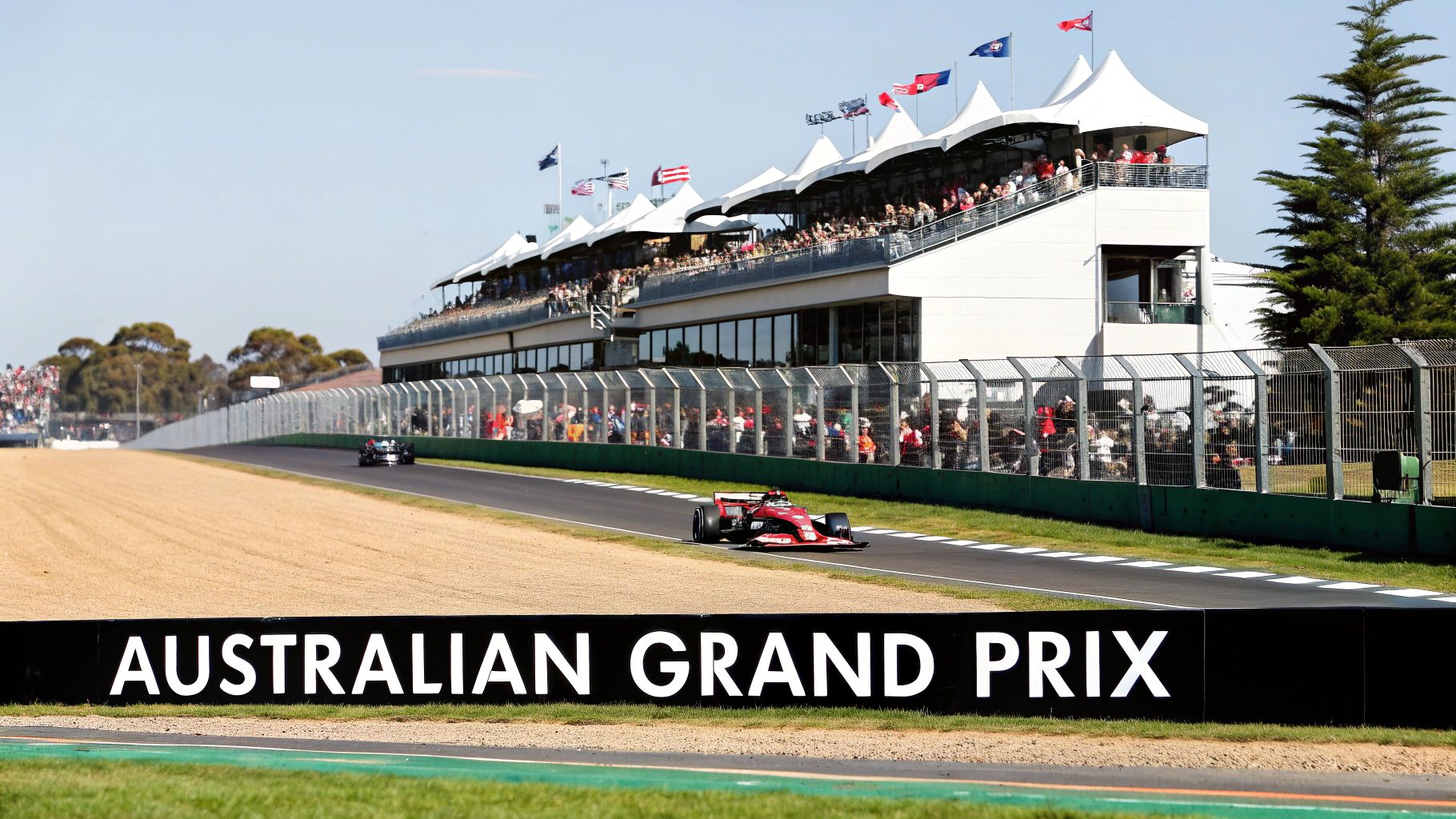
Forget purpose-built, sterile circuits. The Australian Grand Prix unfolds on the Albert Park Circuit, a temporary track that snakes its way around a public lake right in the heart of the city. This stunning backdrop, where urban parklands meet the raw engineering of F1 cars, is a huge part of its magic.
Because it's a semi-street layout, Albert Park starts the weekend notoriously "green"—that means it's dusty and offers very little grip. But as the cars pound around the track, lap after lap, they lay down rubber and the surface evolves dramatically. This constant change throws a real spanner in the works for teams and drivers, often shaking up the order and delivering some seriously unpredictable racing.
The Unmatched Atmosphere
What truly sets the race weekend apart is the vibe. It’s defined by a relaxed yet incredibly passionate Aussie culture. This isn’t just a race; it's a full-blown festival where the scream of V6 engines is backed by live music, incredible air displays, and massive fan zones. It’s an immersive experience that goes way beyond what happens on the track.
The proof is in the numbers. The Australian Grand Prix's popularity is off the charts, pulling in absolutely staggering crowds. In 2023, the event shattered records with 444,631 fans pouring through the gates over four days. They somehow topped that in 2024, with crowds pushing past 460,000. It's just massive.
Why It's a Fan and Driver Favourite
You'll often hear drivers singing the praises of this circuit. Its fast, flowing nature is a real thrill, rewarding bravery and pinpoint precision behind the wheel. For the fans on the ground, the track offers fantastic viewing spots, whether you’re in a grandstand or just chilling on a grassy hill.
Plus, its traditional spot early in the season adds a whole other layer of excitement. It's often the first real test for the brand-new cars and any driver lineup changes, meaning everyone is watching to see who has the pace. For a deeper dive into this iconic race, check out our comprehensive Australian Grand Prix guide.
From the Streets of Adelaide to the Shores of Albert Park
While Melbourne’s Albert Park is now the undisputed home of the Australian Grand Prix, the race’s modern Formula 1 story actually kicked off on the raw, unforgiving streets of Adelaide. For a blistering decade between 1985 and 1995, the South Australian capital played host, quickly carving out a legendary status among drivers and fans alike.
Unlike the season-opener we know today, Adelaide was the final, nail-biting act of the F1 championship. Its tight, wall-lined street circuit was an absolute beast—a high-stakes arena where world titles were famously won and lost in the most dramatic fashion you could imagine. This end-of-year slot created an electric, pressure-cooker atmosphere that defined an entire era of the sport.
The Adelaide circuit became the backdrop for some of F1’s most iconic moments. Who could possibly forget Nigel Mansell's tyre exploding in 1986, snatching a guaranteed championship from his grasp? Or that legendary three-way title fight between Prost, Senna, and Mansell that same year? It was pure, unscripted chaos.
The Game-Changing Move to Melbourne
By the mid-90s, things were starting to shift. Melbourne, hungry to cement itself as a global events city, tabled a seriously compelling bid to poach the race. The decision was announced in 1993, setting the stage for a massive change in the Aussie GP's identity. The final race in Adelaide in 1995, remembered for Damon Hill's dominant win, truly marked the end of an era.
Then, in 1996, Formula 1 roared to life in its new home: the stunning, semi-street circuit winding around Albert Park Lake. This was more than just a change of scenery; it completely flipped the script on the event's character.
Melbourne didn’t just inherit a race; it completely reinvented it. By shifting the Australian Grand Prix from a championship finale to the season opener, it transformed the event's entire story from one of conclusion to one of exciting new beginnings.
This move was nothing short of brilliant. Instead of crowning a champion, Melbourne became the place where brand-new cars were unleashed, rookie drivers made their mark, and every team rolled up with fresh hopes. The anticipation was off the charts, as fans finally got answers to all the burning questions from the long off-season.
The impact was immediate. From that very first race in 1996, which saw Jacques Villeneuve take a stunning pole position on his F1 debut, Albert Park established its own unique brand of excitement. It swapped the nail-biting tension of a title decider for the boundless optimism and sheer unpredictability of a brand-new season—a tradition that continues to define the Australian Grand Prix F1 experience today.
Decoding the Albert Park Circuit and Its Challenges
The Albert Park Circuit isn't just another track on the F1 calendar; it's a unique hybrid beast that cleverly blends the speed of a permanent racetrack with the unforgiving, wall-lined nature of a street circuit. This 5.278-kilometre layout, which snakes its way around a scenic lake, throws a formidable test of skill, courage, and engineering adaptability at every team on the grid.
What truly gives the circuit its character is its temporary setup. For most of the year, these are just public roads. This means the surface starts the race weekend incredibly "green" and slippery, coated in dust and lacking the sticky, rubbered-in grip of a dedicated facility.
This "track evolution" is a massive deal over the race weekend. As the cars pound around, they lay down a layer of grippy rubber, which can dramatically change the car's balance and performance. Teams are constantly chasing this moving target, making those Friday practice sessions absolutely vital for hoovering up data and getting the setup right.
Navigating the High-Speed Flow
Albert Park is famous for its fast, flowing sections that really reward bravery. The run from the super-quick chicane at Turns 9 and 10 down to the heavy braking zone of Turn 11 is a perfect example. Here, drivers are on the absolute limit, using every last inch of kerb to carry as much momentum as possible.
This high-speed personality was cranked up to eleven with recent modifications. Back in 2022, several corners were reprofiled, and the tight chicane at Turns 9-10 was removed entirely to create a flat-out blast towards Turn 11. This didn't just slash lap times; it also created a fourth DRS zone, which has seriously boosted the chances for overtaking.
The infographic below shows the pivotal shift in the Grand Prix's home, a move that completely changed its identity from a tight street brawl to this flowing parkland challenge.
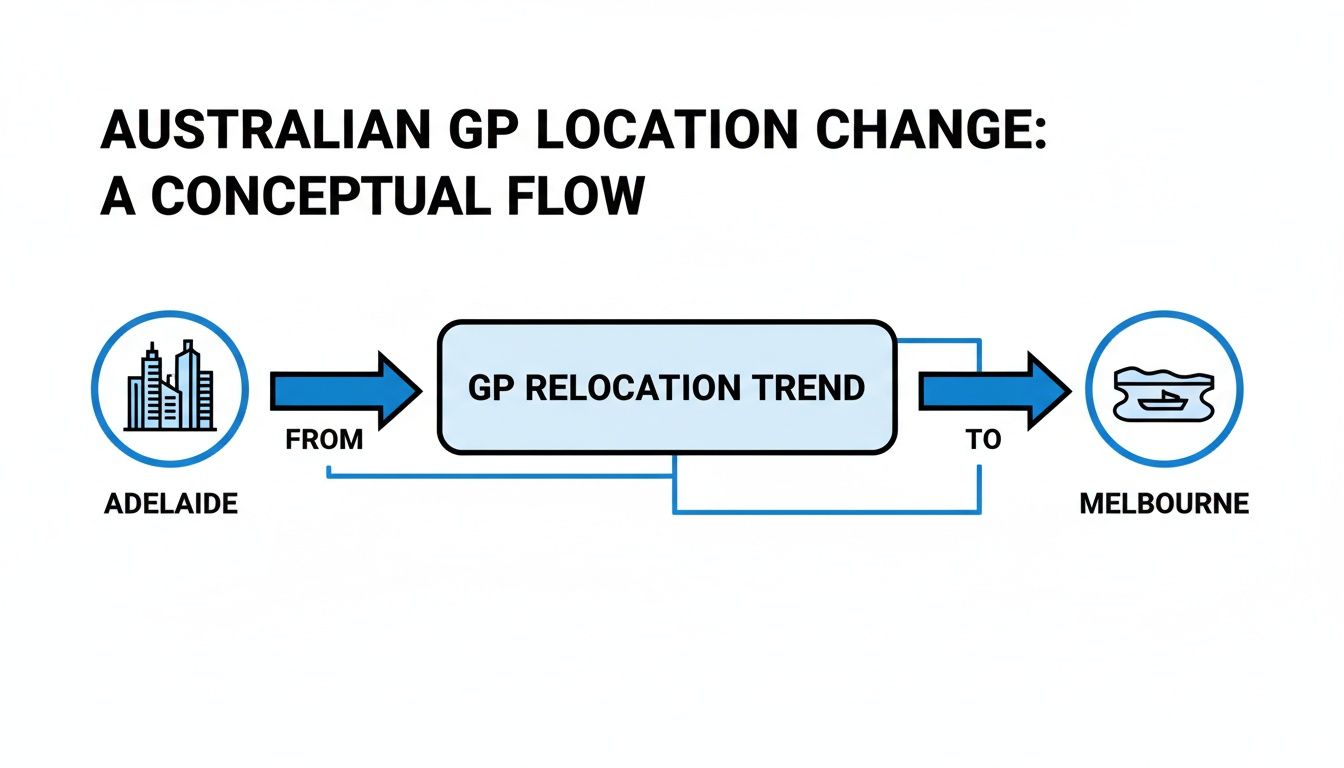
This jump from Adelaide to Melbourne redefined the Australian Grand Prix F1 from a gritty, end-of-season decider to a high-speed, season-opening spectacle.
A car with brilliant aerodynamic efficiency and rock-solid stability is king here. The teams that can dial in a setup that gives their drivers confidence through the fast corners while staying nimble in the slower sections will always have an edge. You can dive deeper into the layout with our Melbourne GP circuit map, which breaks down every twist and turn.
Key Technical Challenges and Overtaking Zones
While raw speed is a huge part of the puzzle, the circuit also demands absolute precision. The tight right-hander at Turn 3 is a classic example—it’s a critical braking zone and a prime spot for first-lap drama.
Below is a quick look at the technical specifications of this unique track.
Albert Park Circuit Key Characteristics
| Feature | Specification / Description |
|---|---|
| Circuit Length | 5.278 km (3.280 miles) |
| Number of Corners | 14 (9 right, 5 left) |
| Race Laps | 58 |
| Race Distance | 306.124 km (190.216 miles) |
| Circuit Type | Semi-permanent street circuit |
| Key Features | Fast, flowing corners; multiple DRS zones; bumpy surface |
| Biggest Challenge | Managing tyre degradation while adapting to track evolution |
| Overtaking Hotspots | Approach to Turn 3, Turn 9, and the new high-speed run to Turn 11 |
These characteristics make Albert Park a genuine all-rounder test for both car and driver.
Here are the main challenges they face lap after lap:
- Braking Stability: Hard braking zones like those into Turn 1 and Turn 3 need a car that stays planted under deceleration, giving drivers the confidence to attack the corner entry.
- Surface Bumps: Being a temporary circuit, the surface is notoriously bumpy. These bumps can easily upset the car's balance and make it tough to find a consistent rhythm.
- Tyre Management: The mix of high-speed corners and heavy traction zones puts a massive amount of energy through the tyres, making degradation a key strategic headache on Sunday.
The real challenge at Albert Park is its split personality. A driver has to be aggressive and fluid through the fast, sweeping sections, then instantly switch to being precise and patient for the slower, more technical corners. Mastering that transition, lap after lap, is what separates the good from the great.
Since the layout changes, the run down to Turn 11 has become the main overtaking spot. With a slipstream and DRS wide open, drivers can line up a move under braking. The long, sweeping curve of Turn 13 also gives a brave driver a chance for a late-braking lunge. Ultimately, success at the Australian Grand Prix F1 is all about finding that perfect balance between raw pace and strategic smarts.
Iconic Moments and Melbourne Grand Prix Legends
You can’t talk about a legendary circuit without talking about the stories etched into its tarmac, and Albert Park is overflowing with them. Since it snatched the Grand Prix crown in 1996, the Melbourne circuit has been a constant source of high-octane drama, weaving a rich tapestry of moments that define the Australian Grand Prix F1 experience.
That very first race set the tone perfectly. The weekend is famous for Jacques Villeneuve storming to pole position on his Formula 1 debut, a move that instantly screamed 'future star'. But the race itself is remembered for something far more chaotic: Martin Brundle's horrifying crash. His Jordan was launched into the air, literally snapping in two as it barrel-rolled into the gravel at Turn 3. Incredibly, he walked away without a scratch.
That blend of rookie brilliance and heart-in-your-mouth action has become Melbourne’s signature.
Homegrown Heroes and Underdog Triumphs
For Aussie fans, the Grand Prix is always an emotional rollercoaster, especially when a local hero is on the grid. The roar of the crowd for drivers like Mark Webber and Daniel Ricciardo created an atmosphere you could feel in your bones. Webber’s insane charge to fifth place for the struggling Minardi team on his 2002 debut sent the home crowd absolutely wild—a moment that still gives fans goosebumps.
Ricciardo's time in F1 brought that same patriotic energy. When the race returned post-COVID in 2022, the fan support was explosive, with an estimated 420,000 people flooding through the gates over the weekend. Ricciardo himself said the buzz felt 'turned up a notch or three', and he wasn't wrong. Attendance has only climbed since, with race day in 2024 hitting a peak of 132,106 fans, cementing the event’s colossal growth as detailed in ESPN's report on the Melbourne Grand Prix's record attendance.
The Drivers Who Mastered Melbourne
Some drivers just get Albert Park. They understand its unique demands. To win here, you need a mix of aggressive, pin-point precision and the knack for adapting to a track surface that's always evolving. Plenty of drivers have stood on the top step, but only a select few have truly made this place their own.
Albert Park isn’t just about raw speed; it's a rhythm circuit. The drivers who can flow through the high-speed chicanes while being inch-perfect on the brakes into the tight hairpins are the ones who consistently find themselves celebrating on Sunday.
Over the years, names like Michael Schumacher and Sebastian Vettel have become synonymous with victory in Melbourne. Their driving styles—built on meticulous car control and razor-sharp strategy—were a perfect match for the circuit's tricky layout. Their success stories are a huge part of the rich F1 history that makes this race so special.
Your Fan Guide to Attending the Race
Planning a trip to the Australian Grand Prix F1 weekend is an incredible feeling, but a bit of forward-thinking can turn a good trip into a legendary one. Let’s get the most important thing out of the way first: you need to book your tickets early. I'm not just saying that—it's absolutely essential.
The event’s popularity has exploded. Tickets now sell out months in advance, and the demand is just wild. The 2025 race weekend pulled in a staggering 465,498 fans, and in previous years, thousands have been left disappointed at the gates of a sold-out event. The Grand Prix attendance figures on Austadiums.com really put the numbers into perspective.
Choosing Your Viewpoint
Alright, you're ready to buy. Now for the big decision: a dedicated grandstand seat or the freedom of general admission?
- Grandstand Tickets: This is your best bet for a reserved spot with a killer view of a specific part of the track. Most have a big screen right opposite, so you won't miss a second of the action happening elsewhere. Prime locations like the Brabham, Jones, and Fangio grandstands give you a fantastic view over the main straight and the frantic pit lane.
- General Admission: If you prefer to wander and find your own perfect spot, this is for you. It gives you the freedom to explore the circuit. A massive fan-favourite spot is the grassy hill overlooking Turn 2—it’s an unbeatable place to watch the beautiful chaos of the opening laps unfold.
Getting to Albert Park is one of the easiest parts, thanks to Melbourne's brilliant public transport system. Trams run straight from the city centre to the circuit gates, and your event ticket usually covers the fare. I wouldn't recommend driving; there are major road closures and next to no parking.
Packing for a Day at the Track
A long day of watching motorsport is a marathon, not a sprint, and comfort is everything. Here’s what you should have in your trackside kit:
- Comfy shoes. You'll be doing a lot more walking around the massive circuit precinct than you think.
- Sun protection. The Melbourne sun can be surprisingly fierce, so a hat, sunscreen, and sunnies are non-negotiable.
- A portable phone charger. You’ll be snapping photos and videos all day, so keep your battery topped up. Our guide on Formula 1 photography has some great tips for getting amazing shots.
- Ear protection. F1 cars are seriously, mind-blowingly loud up close. This is especially important for younger fans.
Smart planning transforms a good race weekend into a great one. Focus on logistics like tickets and transport early, so when you arrive, your only job is to soak in the incredible atmosphere of the Australian Grand Prix.
Lastly, let's talk about where to stay. Melbourne has it all, from budget-friendly hostels to five-star hotels in the CBD and Southbank. The best part? Many are just a short tram ride from the track. My advice is to book your accommodation the same day you book your tickets. It's the best way to lock in a decent price before everything gets snapped up.
Bringing The Albert Park Spirit Into Your Home
That incredible buzz from the Australian Grand Prix F1 weekend doesn’t have to fade away once the chequered flag falls. For true fans who live and breathe motorsport, bringing a piece of that Albert Park spirit into your home or office is the perfect way to keep the passion alive all year round.
It’s about turning a simple room into a personal gallery that celebrates the sport you love. This is where premium, motorsport-inspired wall art really makes a statement. Think of it as capturing the engineering genius and on-track drama in a way that actually complements your personal style. It’s so much more than a poster; it’s a sophisticated nod to the world of Formula 1.
Curate Your Motorsport Passion
Finding the right piece can instantly elevate any space, whether it’s a dedicated fan cave, a modern living room, or even a corporate lounge. The trick is to choose art that really speaks to the circuit’s unique character.
- Minimalist Designs: Clean, modern track layouts in sleek frames are a subtle yet super stylish tribute.
- Detailed Canvases: For something that really gets a conversation going, map-style prints with corner names and track facts are fantastic.
The best motorsport art does more than just decorate a wall—it tells a story. It captures the flow of a legendary circuit and keeps the excitement of the race alive, day in and day out.
At TrackNation, our exclusive collection is meticulously designed to celebrate these iconic circuits. You can explore our premium Albert Park circuit framed canvas print to find the perfect piece for your space. It’s an effortless way to keep the drama and precision of F1 part of your everyday life.
Got Questions About the Grand Prix? We've Got Answers.
Even the most seasoned F1 fan can have a few questions about the Australian Grand Prix weekend. Let's clear up some of the most common ones so you can focus on the action, whether you’re trackside or glued to your screen at home.
When Does the Australian Grand Prix Usually Happen?
Traditionally, the Australian Grand Prix kicks off the whole Formula 1 season, or at the very least, is one of the first handful of races on the calendar. You can almost always count on it taking place in March or early April, setting the tone for the championship fight ahead.
That early-season slot is a huge part of its magic. It’s our first proper look at how the new cars and driver pairings really perform under pressure, which creates an incredible buzz of anticipation. Of course, always double-check the official Formula 1 calendar for the exact dates each year.
What's the Best Way to Get to Albert Park?
Honestly, leave the car at home. Melbourne’s public transport system is fantastic, and it's easily the best way to get to the circuit. Special tram services run constantly and drop you right at the gates from the city centre.
Your race ticket usually covers the tram fare too, making it a no-brainer. Driving is a nightmare, with road closures everywhere, insane traffic, and basically zero parking anywhere near the venue. The tram is your ticket to a stress-free day.
The Australian Grand Prix weekend is a massive logistical puzzle. Using the dedicated public transport is the smartest move you can make. It lets you soak up the excitement without worrying about traffic jams.
Are There Other Races Besides F1?
Absolutely! The on-track action is wall-to-wall for all four days. Alongside the main Formula 1 sessions, the schedule is always jam-packed with awesome support races from other motorsport categories.
You'll often see the future F1 stars battling it out in Formula 2 and Formula 3, plus Australia’s own premier category, the Supercars Championship. It guarantees there’s always something exciting happening on track and gives you a taste of different racing disciplines.
How Can I Watch the Race From Home?
The Australian Grand Prix is broadcast to a massive global audience, so you’ve got options. Here in Australia, the race is usually available on free-to-air channels as well as subscription streaming services that show every single session live.
For everyone watching internationally, F1's own streaming service, F1 TV, is a great bet, or you can tune in via your country's local broadcast partner. Your best move is to check your local TV or streaming guide for the specific channels and times.
Celebrate your love for motorsport all year long. Discover the perfect statement piece for your home or office with TrackNation's exclusive collection of premium circuit art and accessories. Explore our full range at https://tracknation.au.