

Formula 1 Photography Guide Capturing Speed and Drama
When you think of Formula 1 photography, what comes to mind? Is it just a blur of colour as a car screams past at 300 km/h? It's so much more than that. It’s the art of freezing a single, perfect moment in time – a moment filled with high-stakes drama, raw human emotion, and incredible engineering genius.
The Art of Painting with Speed
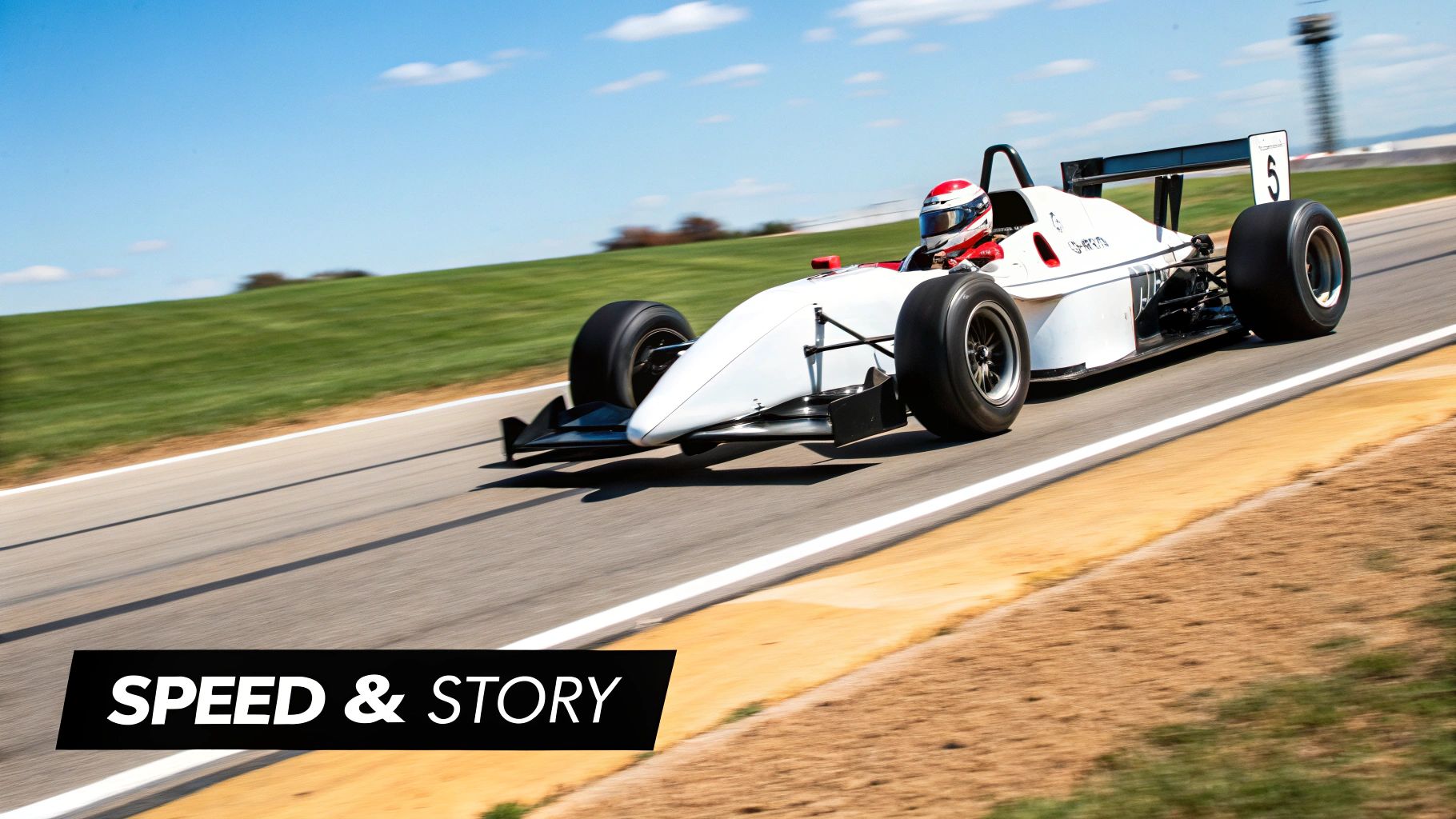
Think of it as a mash-up of high-speed sports journalism, intimate portraiture, and pure action photography. A great F1 photo doesn’t just show you what happened; it tells a story. Every shot is a tiny narrative, revealing the layers of pressure, dedication, and passion that make this sport what it is.
The challenge here is unique. Unlike snapping a photo of a landscape, F1 photographers have to predict the movement of machines that are often invisible to the naked eye. It’s a craft that demands incredible skill, a whole lot of patience, and an almost sixth sense for the rhythm of a race weekend.
Capturing More Than Just the Cars
While the aerodynamic beasts on the track are the stars of the show, the best F1 photography captures the entire ecosystem of a Grand Prix. It looks beyond the circuit to tell the full story.
This means you get a much richer picture, including moments like:
- The Driver's Focus: A close-up on a driver’s eyes through their visor, showing that laser-like concentration just before the lights go out.
- The Pit Crew's Precision: The beautiful, choreographed chaos of a pit stop as a team swaps four tyres in under two seconds.
- The Emotional Highs and Lows: The unbridled joy of a victory celebration, or the quiet, crushing disappointment after a race gone wrong.
At its heart, Formula 1 photography is about freezing a moment of raw human emotion against a backdrop of extreme speed and technology. It’s that human element that turns a good photo into an unforgettable piece of art.
A Legacy of Iconic Moments
Every season, new images are added to the visual folklore of the sport. These aren't just records of what happened; they become woven into the legend of F1. They capture the essence of different eras, from the gritty, dangerous early days to the slick, high-tech spectacle we see today. Digging into the rich history of Formula 1 really gives you a new appreciation for how powerful these images are.
These iconic shots immortalise legendary rivalries, championship-deciding overtakes, and moments of pure sportsmanship. So when you choose a piece of F1 wall art, you’re not just filling a space on your wall. You’re bringing a piece of that incredible history and intense passion right into your home or office.
Capturing The Action At The Australian Grand Prix
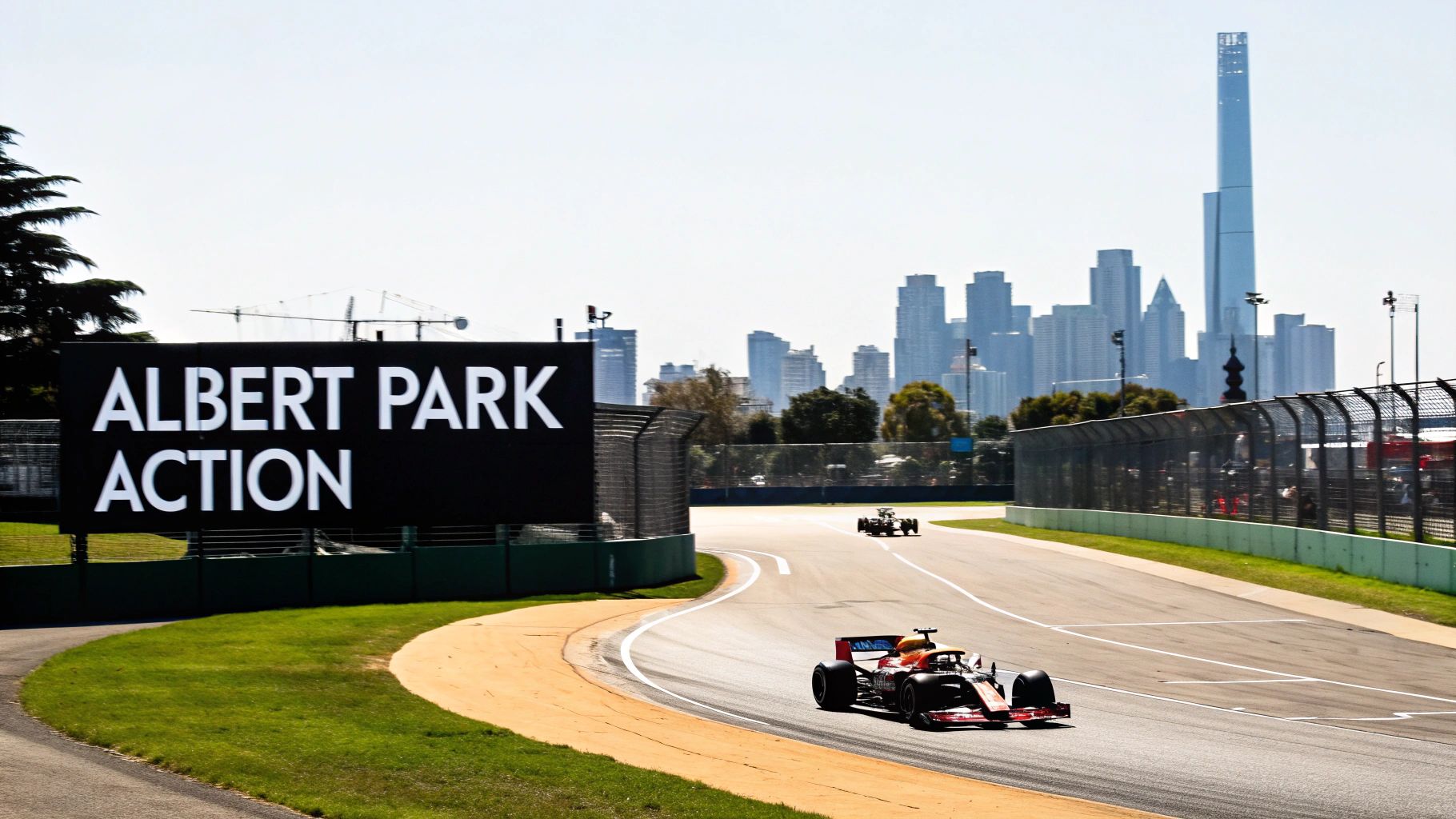
Alright, let's move from theory to the real deal. There's no better place to see all these photographic principles come to life than at a fan favourite: the Australian Grand Prix.
The Albert Park circuit in Melbourne isn't just a race; it's a living, breathing gallery of high-speed art, offering a canvas you just don't get anywhere else. It’s this incredible blend of raw street-track speed, the park’s natural beauty, and that stunning Melbourne city skyline in the background. It's a visual feast that's as challenging as it is rewarding for photographers.
Unlike those permanent, purpose-built circuits, Albert Park has a totally different vibe. Because it's a temporary track, photographers often get much closer to the action, capturing the grit and intensity in a way that feels raw and immediate.
The Visual Opportunities At Albert Park
The circuit is famous for its unique visual signatures, and photographers will plan their entire weekend around nailing shots that can only be found here. That mix of high-speed straights, tight chicanes, and flowing corners creates endless opportunities for dynamic images.
Some of the key hotspots include:
- The Skyline Shot: This is the quintessential Melbourne shot. Capturing the cars with the city looming behind them instantly connects the global sport to its Australian home.
- Turn 1 and 2 Chicane: A classic action zone, especially on the first lap. It’s pure drama, a place where races can be won or lost in a split second.
- Lakeside Views: As the track winds around Albert Park Lake, it opens up chances for beautiful backlit shots. You get that glistening water and blue sky adding a layer of natural beauty to the pin-sharp engineering of the cars.
Albert Park is a circuit that demands creativity. It’s not just about capturing speed; it’s about framing that speed within a uniquely Australian context, making the images instantly recognisable and deeply resonant with local fans.
This setting really does transform the track into a photographer's paradise. In fact, the Australian Grand Prix draws over 80 professional photographers to each event—a testament to its visual appeal since its debut back on 10 March, 1996. The intense competition among this elite group pushes them to find unique angles, from sweeping helicopter aerials to low-down shots in parc fermé, ensuring the images that emerge are truly exceptional.
A Photographer's Perspective
Imagine the pressure and the buzz. With dozens of other world-class photographers lining the track, the goal isn't just to get a clear shot, but to capture something no one else sees. This is where the seasoned pros, especially Australian photographers with deep local knowledge, really shine.
Renowned figures like Kym Illman, who holds permanent FIA accreditation, have an almost intuitive understanding of the circuit's light and angles. That exclusive access lets them move between the pit lane, the grid, and prime trackside spots, capturing those intimate, behind-the-scenes moments that define a race weekend.
They know exactly when the late afternoon sun will hit the cars cresting a specific corner to create that perfect lens flare. This deep familiarity with the Australian Grand Prix is what allows them to tell the complete story of the event—from the tension before the lights go out to the jubilant chaos on the podium. Their work turns abstract ideas like speed and competition into tangible, emotional art that hits home with fans all across Australia.
The Life Of A Formula 1 Photographer
Forget the glamour you see on TV for a second. Behind every incredible trackside photo is a world of gruelling travel, logistical nightmares, and a whole lot of hustle. The life of a Formula 1 photographer isn't just about pointing a camera; it’s a demanding career that’s part artist, part athlete, and part entrepreneur. That glitz of the starting grid? It’s earned through long days and serious personal investment.
There’s no single, clear-cut path to shooting on the F1 circuit. Photographers usually fall into two camps, each with its own set of risks and rewards. Understanding the difference helps you appreciate the real value behind that professionally captured print hanging on your wall.
Salaried Photographers Versus Freelancers
Many of the top photographers you see are on a salary, working for major photo agencies or even the teams themselves. Their job is to get specific shots for their clients, whether that’s for news stories, marketing campaigns, or sponsor commitments. The good part? The agency or team covers all the travel, accommodation, and gear costs. It’s a stable gig in a wildly unstable industry.
Then you’ve got the freelancers. These are the true entrepreneurs of the paddock. They are independent business owners funding their own way around the world, paying for their own flights, hotels, and a small fortune in camera equipment. They do it all in the hope of capturing that one killer shot—an image so powerful that media outlets or collectors will pay a premium for it.
The crucial difference comes down to ownership. A salaried photographer’s work belongs to their employer. A freelancer, on the other hand, retains full rights to every single photo they take, turning their talent into a tangible, valuable asset.
This distinction is everything in the world of Formula 1 photography. A freelancer's entire livelihood depends on their ability to sell their work, which makes every single race a high-stakes gamble.
The Financial Realities And Exclusive Access
The money difference between these two paths can be massive. A salaried shooter might bring in anywhere from USD $30,000 to well into six figures a year, with all expenses covered. A successful freelancer, however, could potentially earn over USD $500,000 from a single, iconic photograph—but they're also carrying all the financial risk.
Getting the access needed to make either path work is the next huge hurdle. The ultimate prize is a permanent FIA accreditation, a credential that only a few dozen photographers in the world hold. This “hard card” is the golden ticket, granting access to the most exclusive areas: the pit lane, the starting grid, and the inner sanctum of the paddock. It unlocks the moments that others simply can’t get close to.
In the AU region, Kym Illman is one of the most prominent figures with this level of access—you’ve probably seen him on social media. He and his son Jayce are the only two Australians with permanent FIA passes, letting them navigate the sport’s most restricted zones. To put it in perspective, an event like the Australian Grand Prix might have up to 150 accredited photographers, but more than half of them are freelancers hustling to make a sale.
This hard-won access is what separates a professional from a fan with a good camera. It's a badge of honour, earned through skill, reputation, and sheer dedication. Whether they’re navigating the tight confines of the garages at the legendary Monaco Grand Prix or lining up the perfect shot in a rain-soaked Spa, their entire job is to be in the right place at the right time. Every stunning F1 print you see is a product of that relentless chase—a piece of art born from grit, investment, and an undying passion for the sport.
Essential Techniques For F1 Photography
Capturing the heart and soul of Formula 1 isn't just about having a fast camera; it’s about mastering a few key techniques that turn a simple picture into a breathtaking piece of art. The pros have a toolkit of methods they use to play with speed, light, and motion, creating the kind of dynamic images that look so incredible hanging on a wall.
Let’s break down how they pull off those iconic shots.
At the core of all action motorsport photography is the relationship between three camera settings: shutter speed, aperture, and ISO. Think of them as a triangle of light control. Change one, and you’ll likely need to adjust another to get the perfect exposure. More importantly, each one has a dramatic creative effect on the final image.
Mastering The Art Of Panning
The most celebrated technique in Formula 1 photography is, without a doubt, panning.
Imagine tracking a bird in flight with your camera, moving smoothly with it as it soars across the sky. Panning is the exact same idea, but you’re trying to follow a car blasting past at over 300 km/h. The goal is to move your camera at the same speed as the car, keeping the vehicle tack-sharp while the background—the crowd, the barriers, the scenery—blurs into beautiful streaks of colour.
It’s this motion blur that screams speed far more effectively than a completely frozen image ever could. It’s a tricky skill that takes a steady hand and a slow shutter speed, usually somewhere between 1/60th and 1/250th of a second.
This next diagram gives you a quick visual guide to the two main paths photographers can take to get trackside and start perfecting these skills.
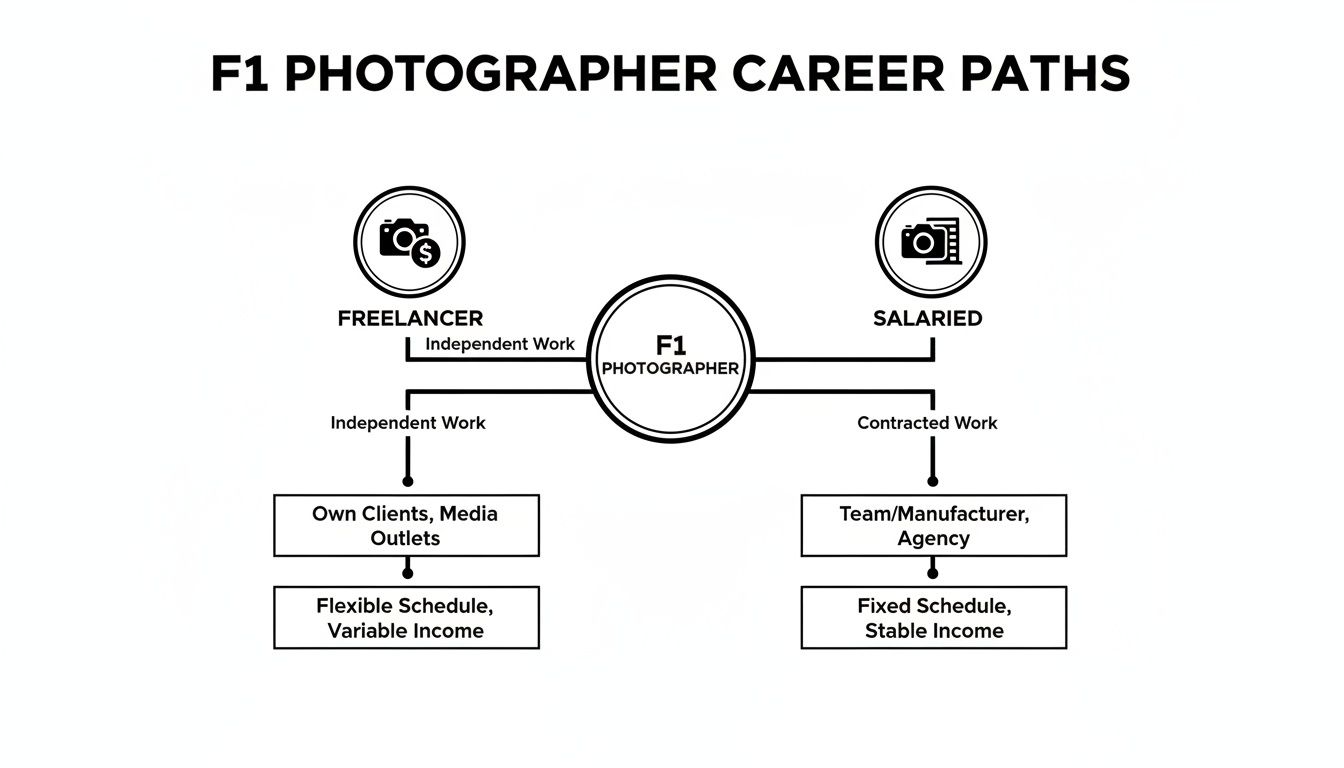
Whether you're freelancing or working for an agency, mastering techniques like panning is the only way to capture images that are both commercially viable and artistically compelling.
To give you a better sense of how these settings work together, here’s a quick-reference table pros use to decide their approach for different types of shots.
Essential Camera Settings For F1 Photography
| Shot Type | Recommended Shutter Speed | Aperture (f-stop) | Purpose |
|---|---|---|---|
| Panning Shot | 1/60s - 1/250s | f/8 - f/16 | Creates motion blur in the background to convey a sense of immense speed while keeping the car sharp. |
| Frozen Action | 1/1000s or faster | f/2.8 - f/5.6 | Freezes the car mid-action with crystal-clear detail, perfect for highlighting aerodynamics or driver focus. |
| Detail Shot (Garage/Pits) | 1/125s - 1/500s | f/1.8 - f/4 | Isolates a specific detail, like a helmet or a wheel nut, by creating a shallow depth of field (blurry background). |
| Crowd/Atmosphere | 1/250s - 1/800s | f/5.6 - f/11 | Keeps a wider scene in focus to capture the energy and scale of the event, from the grandstands to the grid. |
These settings are a starting point, of course. The best photographers are always experimenting based on the light, the track, and the story they want to tell.
Freezing Motion And Creating Depth
While panning is all about creating motion, sometimes the goal is the exact opposite: to freeze a car with absolute, crystal-clear sharpness. This is done with an incredibly high shutter speed, often 1/1000th of a second or even faster. This technique is perfect for capturing the tiny, intricate details of a car's aerodynamics or the raw concentration on a driver's face as they nail a tight corner.
Working hand-in-hand with shutter speed is the aperture, which controls how much of the scene is in focus. A wide aperture (a low f-stop number like f/2.8) creates a shallow depth of field, which makes the car pop by blurring the foreground and background. It’s a classic trick to isolate your subject and draw the viewer's eye exactly where you want it.
Professional F1 photography is a constant dance between shutter speed and aperture. The choice to blur motion for speed or freeze it for detail is what defines the story each image tells.
Gear And On-The-Ground Realities
Pulling off these techniques requires some seriously specialised gear. Massive telephoto lenses—we’re talking 400mm, 500mm, or even 600mm beasts—are a must for getting close-up shots from a safe distance. These are paired with professional camera bodies that have lightning-fast autofocus and can fire off a crazy number of shots per second.
And the workload is just immense. For example, Kym Illman, Australia’s own and the most followed F1 photographer on social media, often clicks the shutter over 15,000 times during a single race weekend. He’s known for shooting through tiny holes in the safety fences at the Australian Grand Prix, using shutter speeds between 1/100th and 1/300th of a second to nail the perfect panning shot. Minutes later, those photos are already going viral as he uploads them directly from the track. You can learn more about Kym Illman's F1 photography journey on his website.
It’s this combination of technical mastery, physical endurance, and creative vision that produces the powerful, emotionally charged photos that resonate so deeply with fans and collectors.
How To Choose The Perfect F1 Wall Art
Bringing the thrill of the track into your home does more than just fill a space on the wall—it’s a personal statement. Choosing the right piece of Formula 1 wall art is about connecting your passion for the sport with your own style. It’s finding an image that tells a story you want to see every single day.
The perfect F1 photograph isn't just a picture of a fast car. It’s a moment frozen in time that really speaks to you. Maybe it's the raw focus in your favourite driver's eyes, the stunning architecture of a legendary circuit like Spa or Monza, or the clean, elegant lines of a classic car from a bygone era.
Start by thinking about what part of Formula 1 truly gets your heart racing. Are you drawn to a specific driver's journey? Fascinated by the engineering marvels that are the cars themselves? Or maybe a particular race holds a special memory. Answering these questions is the first step toward finding a piece that feels genuinely yours.
Finding An Image That Connects
The best art is always the stuff that makes you feel something. When you’re browsing through Formula 1 photography, trust your gut. Look for an image that sparks an emotion—whether it's the adrenaline of a last-lap overtake, the nostalgia for a legendary rivalry, or just the pure beauty of a car hitting the apex perfectly.
Think about the story behind the photo. Is it a shot of:
- Your Favourite Driver: Captured in a moment of triumph, deep focus, or even vulnerability.
- An Iconic Moment: A championship-deciding pass, a famous victory celebration, or an incredible display of sportsmanship.
- A Legendary Track: The glamour of Monaco, the sheer speed of Silverstone, or the history baked into the tarmac at Imola.
- A Classic Car: Highlighting the beautiful design evolution and raw mechanical power of past eras.
That connection to the story is what separates a generic poster from a meaningful piece of art. For a bit of inspiration, exploring a curated gallery of Formula 1 posters can help you discover different styles and subjects you might not have considered.
Matching The Art To Your Space
So, you've found an image you love. Now what? The next step is figuring out how it will work in your environment. The size, material, and frame you choose play a huge role in its overall impact. Your choice should complement the existing vibe of the room, whether it’s a professional office, a relaxed living room, or a dedicated fan cave.
Think of it like a pit stop strategy—you need all the right components working together for the best result. A massive, dynamic action shot could be the perfect focal point for a large, open-plan living area. On the other hand, a smaller, more detailed print might be ideal for a home office where you can appreciate it up close.
The goal is to create a perfect balance between the art and its surroundings. The right piece shouldn't just fit in the space; it should elevate it, turning an ordinary wall into a real conversation starter.
Size And Scale Considerations
Getting the scale right is absolutely crucial. A print that's too small can feel lost on a large wall, while one that's too big can completely overwhelm a smaller room. A good rule of thumb is that your art should fill about two-thirds of the wall space above a piece of furniture, like a sofa or a desk.
Here’s a quick guide to help you choose:
- Small Prints (e.g., A4, A3): Perfect for creating a gallery wall with a few different images, or for adding a touch of personality to smaller spaces like hallways and studies.
- Medium Prints (e.g., A2, A1): A super versatile choice that works well as a standalone piece in bedrooms or home offices.
- Large Statement Prints (e.g., A0 and larger): Ideal for making a dramatic impact in living rooms, entertainment areas, or even corporate spaces.
Before you commit, try mapping out the dimensions on your wall with a bit of painter's tape. This simple trick gives you a clear visual of how the final piece will look and feel in your room. It’s a game-changer.
Choosing The Right Frame And Material
The final touch that ties everything together is the frame and material. This choice can completely change the mood of the photograph, shifting it from modern and minimalist to classic and traditional.
At TrackNation, we offer a couple of options to suit any aesthetic:
- Canvas Prints: These give you a contemporary, gallery-like feel without any distracting glare from glass. The texture of the cotton canvas adds depth and a tactile quality to the image, making it feel more like a painting.
- Framed Prints: A timeless and sophisticated choice. A sleek black frame provides a sharp, modern contrast that makes the colours in the photo pop, while a natural wood frame can add a bit of warmth and a more classic touch.
Think about the style of your room. A minimalist black frame is a perfect match for modern or industrial décor, while a canvas might feel more at home in a relaxed, casual space. Ultimately, the right combination of image, size, and finish will create a stunning piece of Formula 1 wall art that you’ll be proud to show off for years to come.
Understanding F1 Print Collecting And Licensing
Owning a piece of Formula 1 photography is about more than just buying a picture; it’s about holding a tangible slice of motorsport history in your hands. But before you start building a collection, it’s worth getting your head around the business side of things, especially the crucial difference between a print for your wall and an image used for business.
When you buy a print from a gallery or a trusted store like TrackNation, you’re buying it for personal use. This means you have every right to hang that incredible shot in your home, office, or private fan cave. It’s all about your personal enjoyment.
Personal Use Versus Commercial Rights
Things change the moment a photograph is used to promote a business, sell a product, or feature in any kind of marketing. That’s commercial use, and it requires a completely different—and much more expensive—license that has to be sorted out directly with the photographer or their agency.
Using a print commercially without the right license isn’t just bad form; it's a serious breach of copyright. Authentic, licensed photography respects the incredible skill, investment, and often, the risk the photographer took to capture that split-second moment. It’s how the artist gets paid for their work.
An authentic print isn’t just a copy; it's a genuine piece of memorabilia carrying the artist's legacy. When you invest in licensed photography, you're directly supporting the creators who bring the world of F1 to life for fans everywhere.
What Makes An F1 Photograph Valuable?
Not all prints are created equal. A few key factors can turn a simple photo into a highly sought-after collectible, pushing up its long-term value and appeal. Knowing what to look for will help you build a collection that’s truly special.
Here are the key markers of a valuable print:
- Limited Edition Runs: When a photographer only releases a small, fixed number of prints—say, 25 or 50—that scarcity immediately makes it more valuable and desirable.
- Photographer's Signature: An authentic signature from the artist who snapped the shutter adds a personal touch and proves its origin, giving it a huge boost in collectible status.
- Certificate of Authenticity: This is the paperwork that proves the print is the real deal and part of a specific edition. For serious collectors, this provenance is everything.
- The Story Behind the Shot: Photos that capture a historic moment—a championship decider, a legendary overtake, or a rare behind-the-scenes glimpse—carry an immense emotional and historical weight.
Once you get these distinctions, you can make smarter, more confident choices as a collector. You're not just buying a poster; you’re investing in a piece of sporting art. Building a collection is a deeply rewarding journey, and you can discover more about the world of authentic Formula One memorabilia to help guide your passion.
Your F1 Photography Questions, Answered
Diving into the world of Formula 1 photography naturally brings up a few questions, whether you're dreaming of shooting trackside or just want to own a piece of the action. We've talked about the art, the technique, and the style, but let's clear up some of the common queries we get all the time.
Think of this as a quick pit stop to get you the info you need.
How Much Does F1 Photography Gear Really Cost?
Let’s be blunt: the investment is huge. A professional photographer’s kit bag for F1 starts at around $20,000 AUD and can easily rocket past $50,000 AUD. That price tag covers a pro-level, high-speed camera body, a monster telephoto lens (think 400mm or 600mm for those tight track shots), and a handful of other lenses for the paddock and pit lane.
This sky-high barrier to entry is a big reason why buying a professional print is often the best way for a fan to own a genuine, high-quality slice of F1. It’s not just a photo; it’s the culmination of massive investment and hard-earned skill.
Owning a professional F1 photo is more than just hanging a picture. It's an appreciation for the gruelling travel, eye-watering expense, and sheer dedication it takes to freeze those split-second moments from the other side of the fence.
Can I Sell My Own Photos from an F1 Race?
In a word, no. When you purchase a ticket for a Grand Prix, you’re agreeing to their terms and conditions. Buried in the fine print is a clause that says any photos or videos you take are strictly for personal, non-commercial use. Trying to sell your grandstand snaps, even just a few, is a direct violation of those terms and copyright laws.
Commercial F1 photography is a locked-down industry. To shoot professionally, you need official media accreditation from the FIA, which is notoriously difficult to get.
What Turns a Print into a Collectible?
Not all prints are created equal. A few key factors are what elevate a nice photo into a genuine, valuable collectible. Knowing what to look for will help you make a smart buy.
- Limited Editions: Scarcity is everything. A print from a run of just 50 will always be more valuable than one from an open, unlimited edition.
- The Photographer's Signature: An authentic signature from the artist who took the shot adds provenance and a personal connection.
- The Moment Itself: Photos of historically massive moments—a driver clinching a world championship, a legend's final race, or a dramatic on-track battle—have a power and desirability that lasts forever.
- Print Quality: True collectibles are made with archival-grade papers and inks. This isn't your standard photo paper; it’s designed to last a lifetime without fading or discolouring.
When these elements come together, a photograph transforms into a true piece of motorsport history.
Ready to bring the adrenaline of the track into your space? At TrackNation, we offer a curated collection of premium Formula 1 wall art, from iconic circuits to legendary cars, designed to fuel your passion. Explore our collection and find the perfect piece for your home or office.