

A Guide to the Phillip Island Grand Prix Circuit
Perched on the southern coast of Victoria, the Phillip Island Grand Prix Circuit is more than just a ribbon of asphalt—it's the spiritual home of Australian motorcycle racing and a place where breathtaking scenery meets pure, unadulterated speed. For riders and drivers, it's a legendary challenge.
An Iconic Coastal Racetrack
Welcome to Phillip Island, a circuit that has earned its place in motorsport folklore. This isn't just another track; it's hallowed ground, a fast and flowing masterpiece that demands absolute commitment and rewards bravery like few other places on earth.
Join us as we explore its incredible history, break down every iconic corner, and relive the moments that have cemented its legendary status. It’s the circuit’s raw speed, demanding layout, and jaw-dropping ocean views that make it a non-negotiable favourite for competitors and fans year after year.
What Makes Phillip Island So Special
This track is an experience, not just a venue. Its soul comes from a few key elements that truly set it apart from anywhere else in the world.
- A Fast, Flowing Layout: Forget the stop-start nature of many modern circuits. Phillip Island is all about sweeping, high-speed corners that require total confidence and precision. It’s a track that rewards pure talent.
- Stunning Coastal Scenery: Set right on the edge of the Bass Strait, the circuit delivers panoramic ocean vistas that create one of the most beautiful backdrops in global motorsport. You can almost taste the salt in the air.
- A Rich Motorsport Heritage: The island’s racing history stretches back to 1928, when racers first tore up the public roads. For nearly a century, it has been a cornerstone of Australian motorsport.
- A True Rider’s Circuit: Ask any motorcycle racer, and they’ll tell you this place is special. Its fast, flowing nature is considered the ultimate test of rider skill, which makes winning here mean just that little bit more.
Phillip Island is a pure expression of speed and beauty. The layout itself encourages incredible, down-to-the-wire racing, while its seaside location provides a spectacle that almost no other track can touch. It's a place where the high-stakes drama of motorsport feels perfectly in tune with the raw nature surrounding it.
Now you have a sense of what makes the Phillip Island Grand Prix Circuit such a standout. To see how it measures up against other iconic venues, check out our guide to different F-1 circuits map from around the globe.
A Rich History: From Dirt Roads To Global Fame
Long before the scream of modern MotoGP bikes echoed across Bass Strait, the spirit of racing was already alive and kicking on Phillip Island. The story of the Phillip Island Grand Prix Circuit doesn't start with pristine asphalt and grandstands. It begins with the grit and guts of pioneers tearing down dusty public roads in the 1920s. This is where the legend was born, forged through decades of passion, heartbreak, and triumphant revival.
The island’s motorsport roots run deep. The first-ever Australian Grand Prix was held right here in 1928. Can you picture it? Drivers wrestling rudimentary machines around a rugged, unsealed triangular course of public roads—a universe away from the billiard-table-smooth surface fans know today. It was raw, dangerous, and utterly captivating, laying the foundations for everything to come.
The Birth of a Permanent Circuit
Racing on public roads set the stage, but the dream was always for a purpose-built track. That dream became a reality in the 1950s when a group of local businessmen put their money where their mouth was, funding the construction of a permanent venue. This new circuit was a game-changer, designed to be fast and flowing to perfectly complement the island’s natural, sweeping contours.
This new era also gave birth to an iconic Australian motorsport event: the Armstrong 500. First held in 1960, this endurance race for production cars quickly became a national institution. It was a true test of driver and machine, and its wild success cemented the circuit's reputation as a premier racing destination. The event even eventually evolved into the legendary Bathurst 1000. If you're curious about this period, you might find our article on broader F-1 history an interesting read.
The journey, however, was far from a smooth ride. The circuit’s story is one of incredible resilience. After its 1928 debut on open roads, a permanent track was finally built and opened in March 1956. But financial struggles forced its closure from 1962 to 1966 and again from the late 1970s until its grand reopening in 1989.
This timeline really puts the circuit's evolution into perspective, from its grassroots origins to its modern, world-class status.
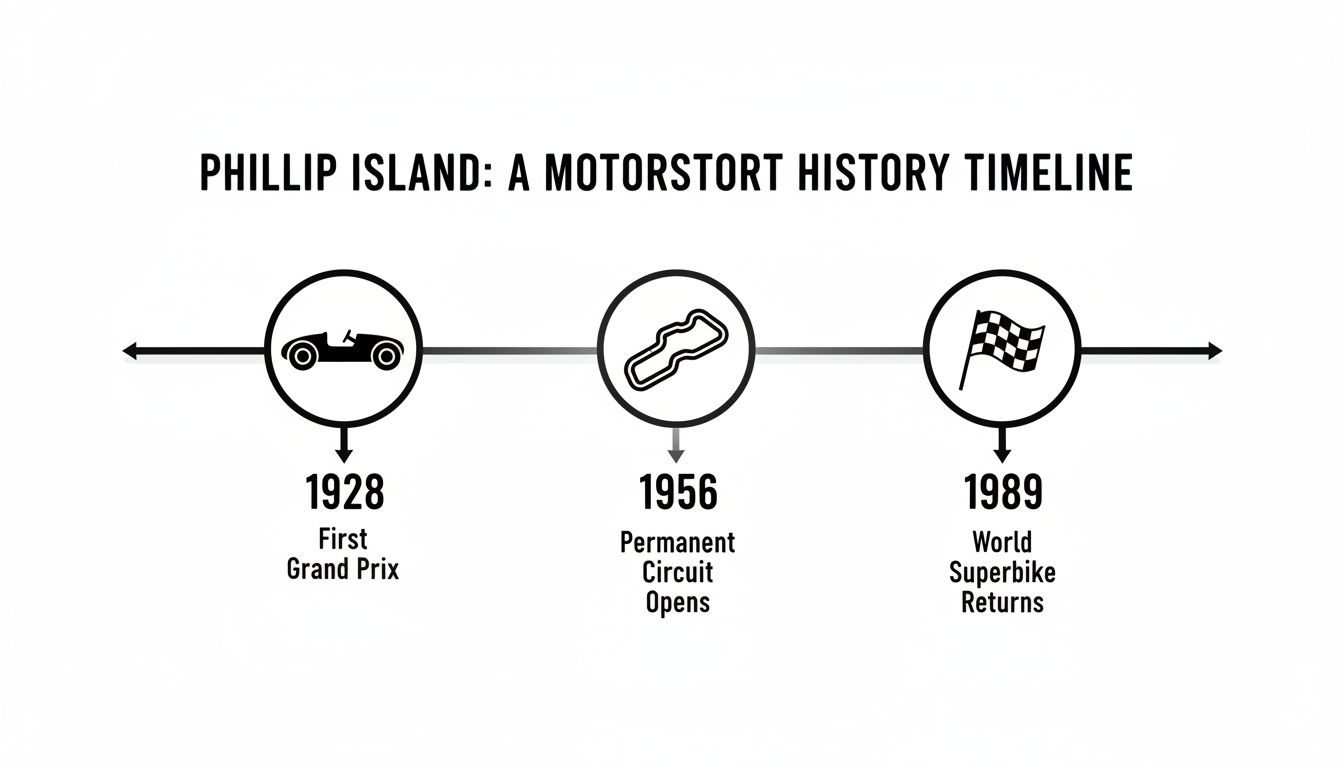
You can see the three pivotal moments that truly define the track's journey: the dawn of racing in 1928, the establishment of the permanent circuit in 1956, and its celebrated return to the world stage in 1989.
A Modern Icon Is Born
Bringing the circuit back to life in the late 1980s was a monumental effort. The track was completely rebuilt and modernised, getting it ready to host the world's best. In 1989, it welcomed the Australian Motorcycle Grand Prix for the very first time—an event that would become synonymous with Phillip Island. The race was an instant classic, and the circuit's fast, flowing nature immediately won over riders and fans alike.
The return of world championship racing in 1989 wasn't just a reopening; it was a rebirth. It solidified Phillip Island's identity as the spiritual home of two-wheeled racing in Australia, a reputation it has proudly held ever since.
Since that day, the Phillip Island Grand Prix Circuit has become a beloved fixture on the international motorsport calendar. Its history is a powerful story of resilience, driven by a community’s unwavering dedication to preserving a venue that is so much more than just a track—it's a genuine piece of Australian sporting heritage.
Mastering the Track: A Corner-By-Corner Guide
Strap yourself in. We're about to do a high-speed virtual lap of the legendary Phillip Island Grand Prix Circuit. At 4.445 kilometres long, this isn't just a ribbon of asphalt; it's a masterpiece of flowing, high-commitment corners that reward pure bravery and precision. Let's break down its twelve turns to see what makes a perfect lap here so special.
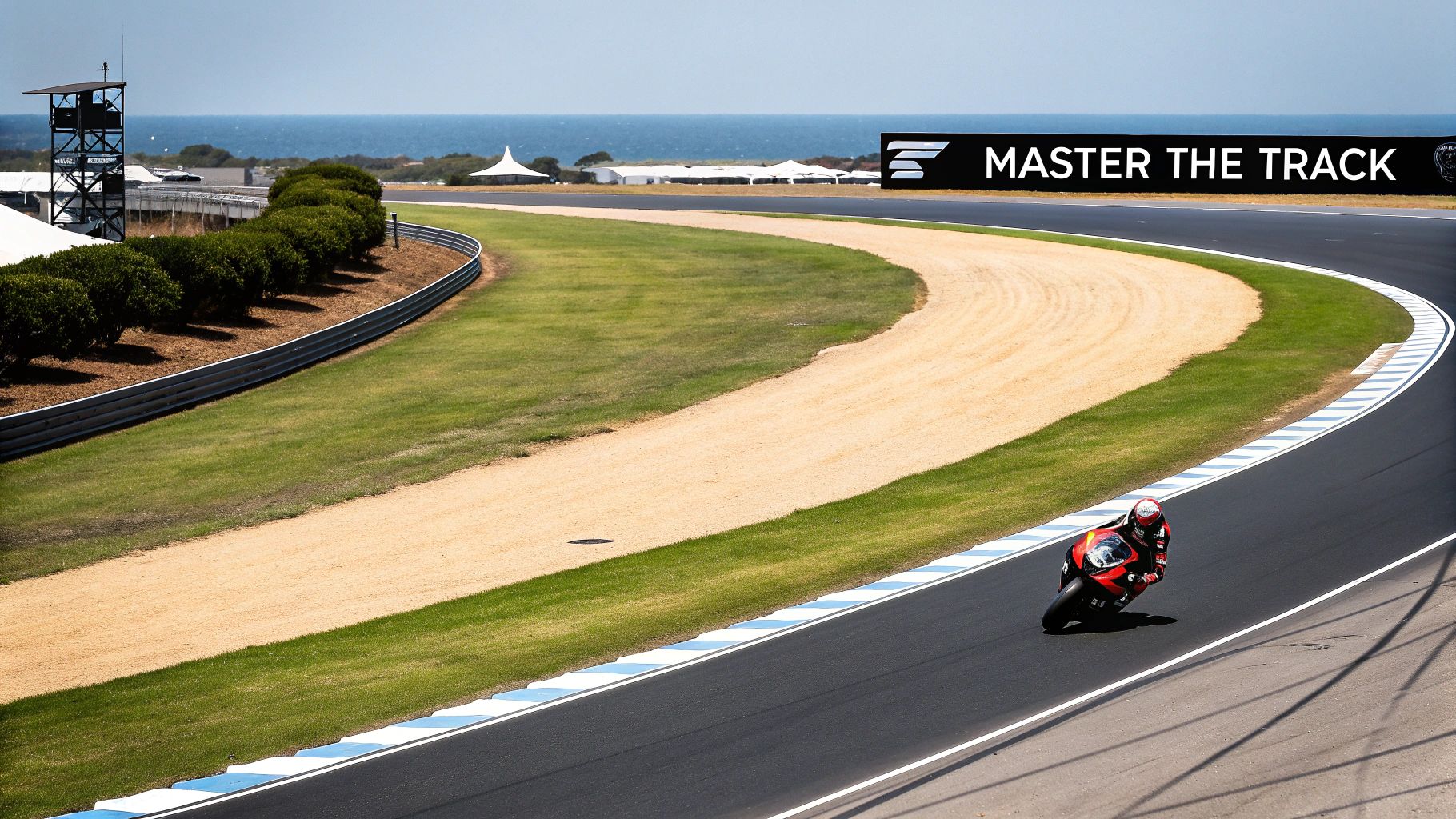
Gardner Straight To The Southern Loop
The lap kicks off on the long Gardner Straight, a place where both bikes and cars stretch their legs and hit top speed. It’s a massive slipstream zone that slingshots you towards the first sequence of corners, immediately setting the tone for what’s to come.
Then, it’s hard on the brakes for Turn 1, Doohan Corner. This isn't just a corner; it's a test of nerve. It’s a fast, sweeping right-hander that demands immense courage to tip into at incredible speed, letting the machine drift wide on exit to get in position for what's next.
From there, you flow directly into Turn 2, the Southern Loop. This is a long, tightening left-hander that feels like it goes on forever. Carrying momentum here is everything. It’s a deeply technical corner where a strong exit is non-negotiable for the short blast that follows, making it a prime spot for a clever overtake.
The Critical Honda And Siberia Section
Next on the agenda is the infamous Turn 4, Honda Corner, also known as the Hairpin. This is the slowest point on the entire circuit, and paradoxically, one of the most important. It’s a massive braking zone into a sharp right that demands a perfect exit to maximise speed down the straight towards Siberia.
Think of it as a slingshot. A slightly slower entry lets you get on the power much earlier, catapulting you down the straight. Countless races have been won and lost right here.
Turn 5 is just a gentle left kink before you plunge downhill into the fast and committed Turn 6, Siberia. This corner is deceptively quick and requires absolute commitment. It’s another fantastic place to see overtaking, especially in bike racing, as riders dive down the inside under braking.
The sequence from Honda to Siberia perfectly captures the rhythm of Phillip Island. It forces a dramatic shift from the slowest point on the track to one of its fastest downhill sections, testing a driver or rider's ability to adapt in an instant.
This constant change of pace and corner style is what defines the circuit. For another track with its own unique set of demanding corners, you might want to check out our guide to the Mt Panorama Circuit map, the intimidating home of the Bathurst 1000.
Conquering The Heights And The Final Corners
After exiting Siberia, it's hard on the power through the sweeping left-handers of Turn 7 and Turn 8. These corners set you up for the climb to the highest point on the circuit.
Turn 9, Lukey Heights, is a blind-crest right-hander with a dramatic drop waiting on the other side. This is where the track’s elevation changes really make themselves felt. Nailing the line over the crest is critical before you stomp on the brakes for the tight Turn 10.
That brings us to MG Corner. Turn 10 is another slow, methodical right-hander that acts as a launchpad for the final two corners. Just like Honda, a clean, powerful exit here is the only way to carry speed where it counts.
The lap finishes with two of the most demanding corners in Australian motorsport. Here's a quick look at all the turns before we tackle those final two.
Phillip Island Circuit Corner Guide
The table below breaks down each of the circuit's 12 distinct corners, giving you a quick reference for what makes each one unique.
| Corner Number | Corner Name | Direction | Key Characteristic |
|---|---|---|---|
| 1 | Doohan Corner | Right | High-speed entry, requires serious commitment |
| 2 | Southern Loop | Left | Long, tightening radius; momentum is key |
| 3 | Stoner Corner | Left | Incredibly fast, leading into Honda |
| 4 | Honda Corner | Right | Slowest corner, heavy braking, critical exit |
| 5 | (No Name) | Left | Slight kink setting up for Siberia |
| 6 | Siberia | Left | Fast, downhill, and a key overtaking spot |
| 7 | (No Name) | Left | Flat-out sweeper leading up the hill |
| 8 | (No Name) | Left | The final part of the climb to Lukey Heights |
| 9 | Lukey Heights | Right | Blind crest with a steep drop on exit |
| 10 | MG Corner | Right | Tight and slow, crucial for the final run |
| 11 | (No Name) | Left | Now part of the final sweeping section |
| 12 | (No Name) | Left | Opens onto the main Gardner Straight |
Understanding this flow is essential to mastering a lap here, especially when you arrive at the final, breathtaking section.
Now, let's look at that final sequence which has been tweaked over the years. Originally two distinct turns, they now flow as one incredible challenge.
The end of the lap is a full-throttle blast through a fearsomely fast, fifth-gear left-hand sweep that requires absolute faith in your machine’s grip. Drivers and riders are right on the edge, letting the vehicle run out to the kerb as the corner opens onto the Gardner Straight. Maintaining speed here is everything, as it dictates your momentum all the way to the finish line.
Mastering this final corner feels like threading a needle at over 200 km/h. It's the ultimate test of skill and nerve—a fitting end to a lap around one of the world's greatest racetracks.
Legendary Events and Unforgettable Moments
A ribbon of asphalt is one thing, but it’s the battles fought upon it that truly make a circuit legendary. The Phillip Island Grand Prix Circuit is hallowed ground, a stage where champions are forged and rivalries explode in moments now etched into motorsport folklore. More than anything else, it's two-wheeled racing that defines this place's soul.
When the Australian Motorcycle Grand Prix came home to the island in 1989, it just felt right. The track’s fast, flowing layout seemed custom-built for Grand Prix bikes, and it didn't take long for it to become a favourite for riders and fans alike. It’s now the circuit's crown jewel—an annual pilgrimage for thousands who flock here to see the world's best teetering on the ragged edge.
The Spiritual Home of Australian MotoGP
The bond between Phillip Island and premier-class bike racing is unbreakable. The circuit has hosted the Australian Motorcycle Grand Prix every year since 1997, cementing its reputation as one of Australia’s most vital motorsport venues. It's where local heroes become gods.
One of the most emotional moments came early on, in 1990, when Wayne Gardner—Australia’s first 500cc World Champion—scraped out a hard-fought victory in front of a roaring home crowd. It was pure magic.
Decades later, another Aussie, Casey Stoner, turned the circuit into his personal hunting ground. His unbelievable run of six straight victories from 2007 to 2012 was nothing short of total domination. It was so masterful, in fact, that Turn 3 was officially renamed "Stoner Corner" in his honour. These weren't just wins; they were declarations that burned Phillip Island into the hearts of Australian fans forever.
Of course, the island has also been the backdrop for international brilliance. The most successful rider here in the modern era is Valentino Rossi, who went on an incredible tear, claiming an amazing six victories between 2001 and 2005. This history of epic clashes is what makes the event so electric, with Jorge Lorenzo still holding the lap record at a blistering 1'27.899. You can dive deeper into the Australian MotoGP's storied history on motogpnews.com.
More Than Just Grand Prix Racing
While MotoGP might grab the headlines, the circuit’s calendar is packed with other world-class events that prove just how versatile this track is. The annual season opener for the Superbike World Championship (WSBK) is another huge drawcard, delivering the kind of thrilling, fairing-bashing action that production-based bikes are famous for.
The circuit’s history on four wheels is just as rich. The legacy of the Armstrong 500, the race that eventually became the Bathurst 1000, was born right here. More recently, the V8 Supercars have given us countless dramatic moments, with drivers wrestling their heavy, high-powered beasts through the circuit's sweeping, high-speed corners.
Phillip Island doesn't just host races; it creates legacies. Whether it's a last-lap MotoGP thriller or a historic touring car battle, the circuit has a unique ability to produce unforgettable motorsport drama.
The circuit’s major events include:
- Australian Motorcycle Grand Prix (MotoGP): The main event, pulling in massive international crowds to witness the absolute pinnacle of bike racing.
- Superbike World Championship (WSBK): Traditionally kicks off the global season with its signature bar-to-bar action.
- V8 Supercars Championship: While not a permanent fixture today, its past races have added so much to the circuit’s four-wheeled heritage.
- Historic Racing Festivals: A fantastic celebration of motorsport’s golden eras, showcasing classic cars and bikes from decades gone by.
Each event adds another chapter to the circuit's incredible story. From Gardner's emotional win to Rossi's reign and Stoner's absolute dominance, the Phillip Island Grand Prix Circuit is a living, breathing museum of motorsport history, where every race weekend holds the promise of another legendary moment.
The Ultimate Guide for Spectators and Photographers
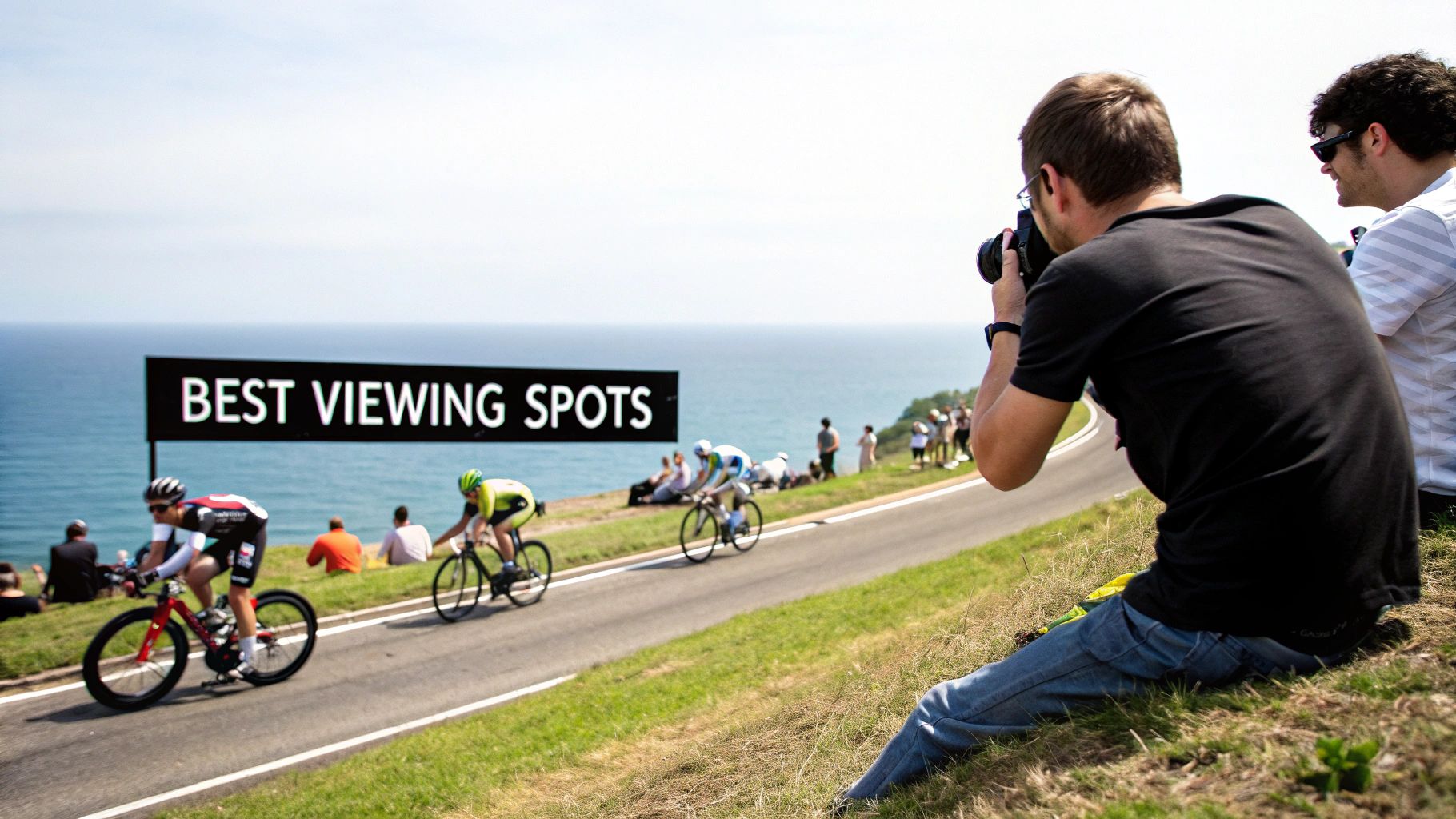
There’s nothing quite like experiencing the Phillip Island Grand Prix Circuit in person. It’s an attack on the senses—the roar of engines echoing off the cliffs, the sharp scent of salt in the air, and the breathtaking sight of bikes and cars hurtling past.
Unlike so many modern tracks hemmed in by concrete, Phillip Island's layout is like a natural amphitheatre. Its open, flowing design means that a General Admission ticket is your passport to explore and find your own perfect view of the action.
Best Viewing Spots for Every Fan
If you thrive on pure drama and noise, the grandstands along Gardner Straight are where you need to be. You'll witness the explosive race starts, the frantic final sprints to the chequered flag, and get a brilliant view into the pit lane to watch team strategies unfold in real-time. The atmosphere here is absolutely electric.
But for many, the real soul of Phillip Island is found on its grassy, elevated banks. Each one gives you a totally unique perspective.
- Lukey Heights: This is, without a doubt, the most legendary spot. From this high point, you see the machines crest a blind summit before diving hard into the tight MG Corner. The panoramic views from up here are just spectacular, covering a massive chunk of the circuit.
- The Southern Loop: A phenomenal place to watch riders push the very limits of grip through a long, fast, and sweeping corner. It’s a pure test of momentum and a prime location to see overtakes being set up for the corners to come.
- Siberia (Turn 6): Tucked away at the circuit’s lowest point, this downhill corner is an action magnet. It’s a savage braking zone that practically begs for bold, late-braking lunges, making it a favourite for anyone who loves watching wheel-to-wheel battles.
Prime Locations for Photography
For photographers, Phillip Island is a canvas like no other. The mix of raw speed against the stunning coastal scenery creates endless chances to nail that one perfect shot. While the pros get trackside access, amateur photographers with a decent zoom lens can still walk away with incredible images.
Lukey Heights is an obvious starting point, giving you an elevated angle to capture bikes popping wheelies over the crest with nothing but sky behind them. The Southern Loop is another top choice, letting you frame the machines at full lean with the Bass Strait creating that iconic, world-famous Phillip Island backdrop.
Capturing motorsport is about telling a story of speed and drama. At Phillip Island, the environment itself becomes a key character in that story, with the ocean providing a powerful and unique backdrop that you won't find anywhere else in the world.
If you're keen to sharpen your skills, our detailed guide on Formula 1 photography has some great tips that are just as useful for shooting bikes as they are for cars.
Practical Tips for Race Weekend
A little bit of prep goes a long way to making your race weekend a brilliant one. During huge events like the MotoGP, the island’s population balloons, so expect big crowds and plenty of traffic. Get to the track early to claim a good patch of grass, especially with a GA ticket.
And remember the golden rule of Victorian weather: pack for four seasons in one day. Sunscreen, a hat, a good rain jacket, and some warm layers are non-negotiable. Most importantly, wear comfortable shoes—you’ll be doing a lot of walking as you explore everything this magnificent circuit has to offer.
Celebrating The Circuit With Motorsport Wall Art
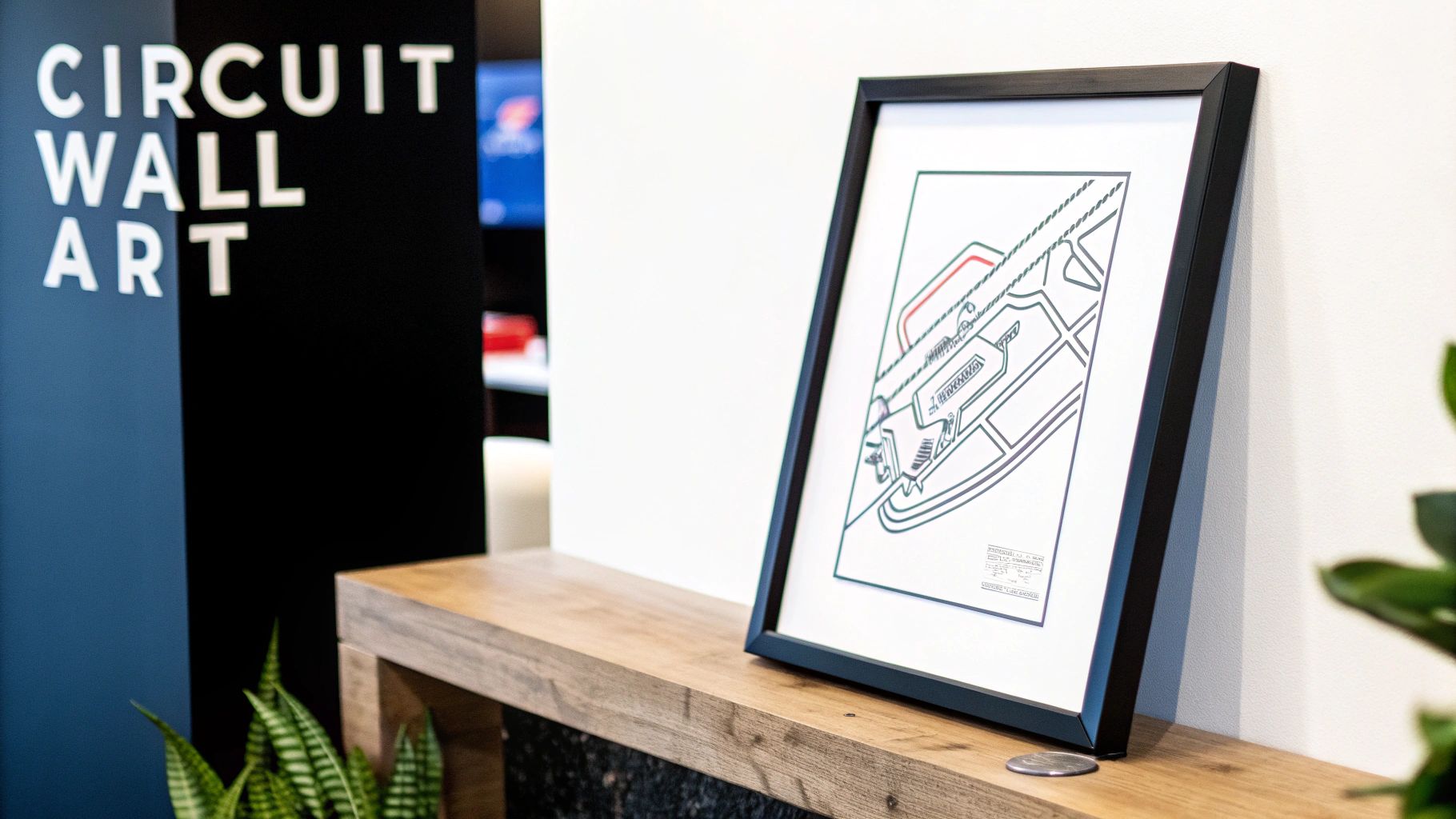
The passion for the Phillip Island Grand Prix Circuit doesn't have to end when the chequered flag falls. For true enthusiasts, the circuit's iconic layout is more than just a configuration of corners; it's a piece of art that symbolises speed, history, and breathtaking design. Motorsport wall art transforms this love for the track into a sophisticated statement piece for your home, office, or personal fan cave.
This isn't about just hanging a poster. It’s about capturing the essence of the track’s fast, flowing character in a way that complements your space. The circuit’s elegant, ribbon-like shape, with its dramatic sweeps and tight hairpins, lends itself beautifully to artistic interpretation, making it a powerful visual centrepiece.
Choosing Your Circuit Style
The right artwork should reflect both your passion and your personal style. Think about the feeling you want to create. Are you after a clean, modern aesthetic or something with a touch of classic motorsport heritage? The choice of style can completely change how the track is perceived.
Here are a few popular approaches to consider:
- Minimalist Line Art: This style boils the circuit down to its purest form—a single, elegant line on a clean background. It’s perfect for modern offices or living rooms where you want a subtle nod to the sport.
- Detailed Track Maps: For those who love the technical details, a map-style print featuring corner names, key markers, and statistics offers a deeper connection to the racing experience.
- Abstract Interpretations: Some pieces use colour and texture to capture the energy and motion of racing, turning the layout into a dynamic, abstract artwork that hints at its motorsport origins without being too literal.
A well-chosen piece of circuit art does more than just decorate a wall. It's a daily reminder of the thrilling moments and legendary battles that have unfolded on that specific stretch of asphalt. It's a conversation starter and a tribute to the sport.
Placement and Presentation
Where and how you display your artwork is just as important as the piece itself. A large canvas print of the Phillip Island Grand Prix Circuit can become the commanding focal point of a media room or fan cave, immediately setting the tone.
For a more integrated look, you could create a gallery wall. Try pairing a Phillip Island print with artwork of other legendary tracks, like Monza or Spa-Francorchamps, to create a curated collection celebrating global motorsport venues. To explore more ideas on how different tracks can be transformed into art, you might be interested in our guide to Formula 1 wall art.
Ultimately, bringing the circuit into your space is about celebrating a place that means something special. Whether through a sleek framed print above your desk or a bold canvas in your living room, it’s a way to keep the spirit of Phillip Island alive long after the engines have gone silent.
Right then, let's clear up a few common questions that always seem to pop up about Phillip Island. We've gone deep on what makes this place so special, but here are the quick-fire answers you might be looking for.
Is Phillip Island Still an F1 Track?
This one comes up a lot. The short answer is no, the Phillip Island Grand Prix Circuit has never held a modern Formula 1 World Championship race. While the track is breathtakingly fast, its classic layout is generally seen as too narrow with not enough runoff for the insane speeds and safety needs of today’s F1 cars.
But don't let that fool you into thinking it lacks four-wheeled pedigree. The circuit's history is steeped in Grand Prix racing. In fact, Phillip Island proudly hosted the Australian Grand Prix for cars way back from 1928 to 1935. The very first one, in 1928, was a brutal 6.5-mile open-road course where British driver A.C.R. White wrestled an Austin 7 to victory. It's a place with serious motorsport heritage, which you can read more about in this detailed Phillip Island history on Wikipedia.
Can You Drive Your Own Car on the Track?
Yes, you absolutely can! This is where the dream becomes reality for so many enthusiasts. The circuit runs regular Open Track Days, giving you the chance to unleash your own car or bike on the very same sacred tarmac chewed up by legends like Rossi and Stoner.
It’s an incredible opportunity. The days are properly organised to suit everyone from first-timers finding their feet to seasoned track-day warriors. Honestly, there's no better way to understand just how demanding this place is—the sweeping corners, the elevation changes—than by getting behind the wheel yourself.
Tackling Phillip Island yourself is a true bucket-list moment. It gives you a visceral connection to the circuit that watching from the sidelines just can't match. You feel every metre of it and gain a whole new respect for the pros who make it look easy.
What Else Can You Do at the Circuit?
Phillip Island is much more than just a track for race weekends and open days; it’s a full-on destination with plenty to offer everyone, not just the hardcore motorsport nuts.
- Go-Karting: Fancy a race? They have a 750-metre replica of the main circuit where you can battle it out with your mates.
- Guided Circuit Tours: Go behind the scenes and get a proper look at places like pit lane, the media centre, and the iconic winner's podium.
- History of Motorsport Display: Check out an awesome collection of historic race cars and bikes that tell the story of Australian motorsport.
- Champions Café: Grab a bite to eat with what might be the best view in motorsport, looking out over the track towards the Bass Strait.
All these extras make the circuit a brilliant day out for families and visitors, mixing the thrill of speed with a rich history and some truly stunning scenery.
At TrackNation, we channel our passion for legendary circuits into beautiful wall art. Our premium prints of the Phillip Island Grand Prix Circuit capture the raw energy and flowing lines of this iconic track, making it the perfect statement piece for your home or office. Check out our collection and bring the spirit of motorsport into your space at https://tracknation.au.